
Find the Right Prospects. Create the Right Opportunities.
Effective lead generation begins long before someone fills out a form. It starts with understanding the market, identifying the right audience, understanding what motivates them, and determining where they are most likely to engage.
Pulse Analytics combines market research, competitive intelligence, audience analysis, digital marketing, conversion strategy, technology, and analytics to build lead generation systems designed around your business.
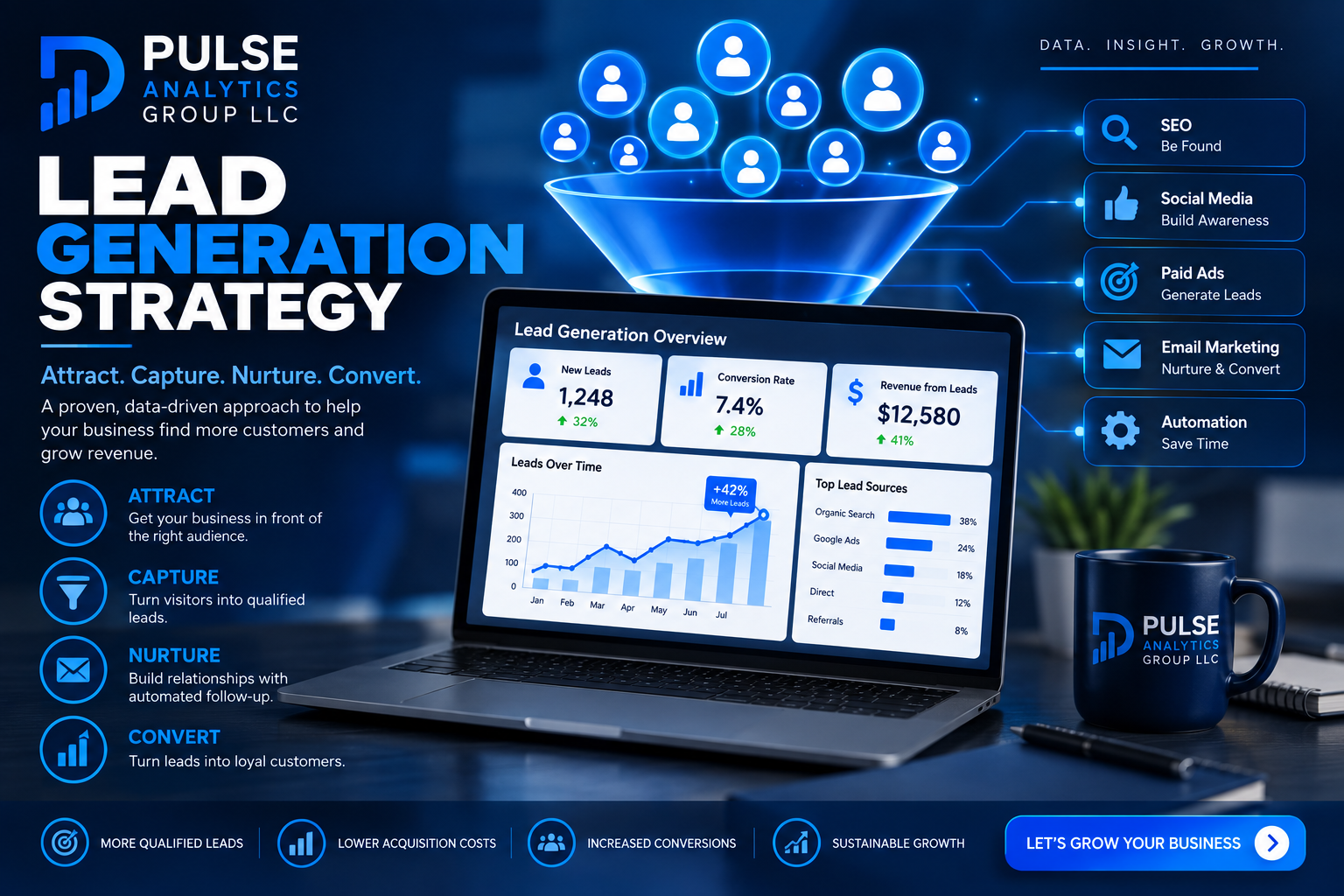
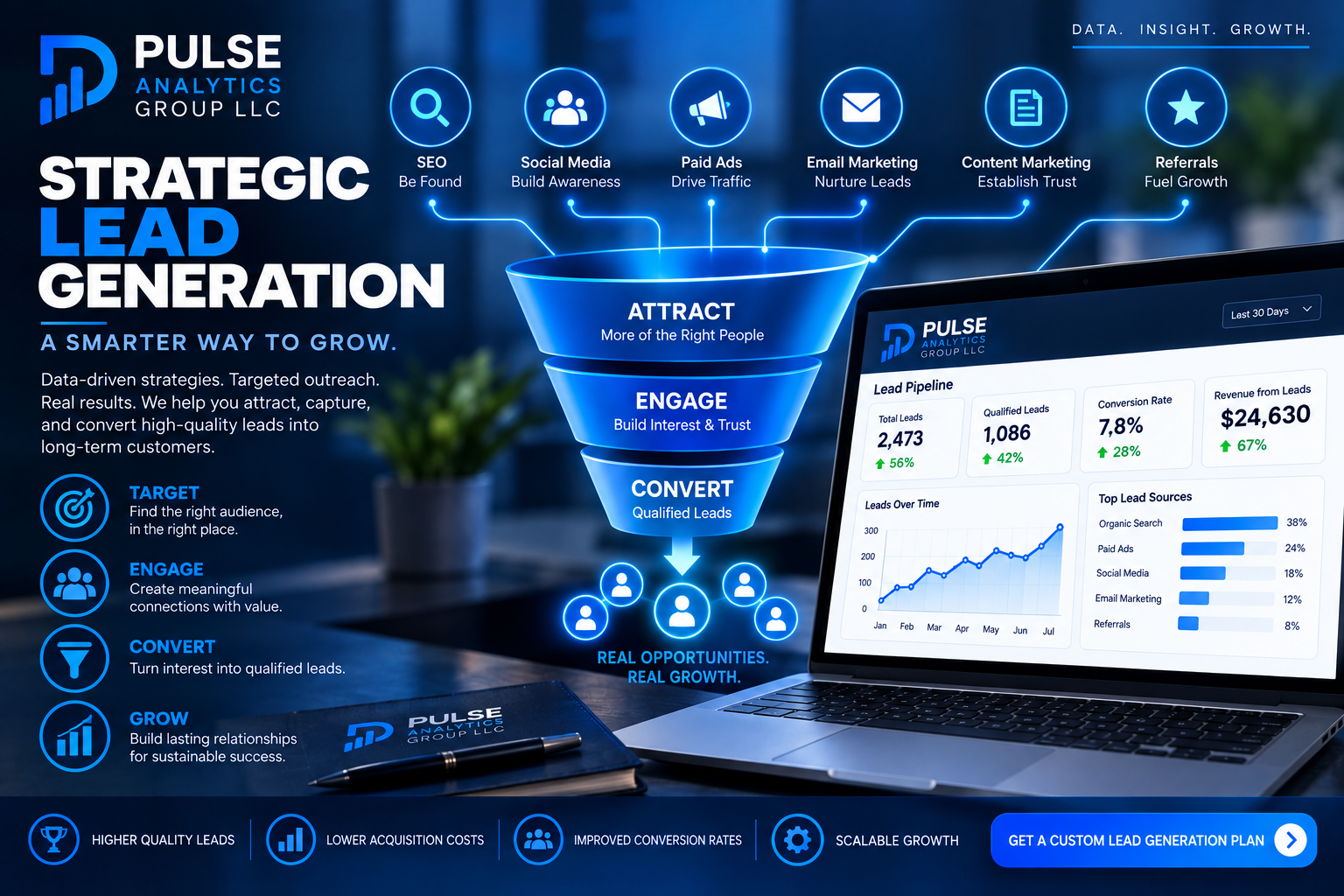
More Leads Are Not Always Better
A business can generate hundreds of inquiries and still struggle to grow if those inquiries are poorly qualified, commercially irrelevant, or unlikely to become customers.
Effective lead generation focuses on attracting people and organizations that have a legitimate relationship to the product, service, market, or problem being addressed.
That requires research before execution.
We Research the Market Before We Tell You Who to Target
Lead generation becomes substantially more effective when the strategy is based on evidence rather than assumptions.
Market size, customer behavior, competitors, search demand, geographic opportunity, industry conditions, pricing, positioning, and digital adoption can all influence where opportunities exist.
Our research process is designed to uncover those conditions before resources are committed to acquisition.
Lead Generation Is Becoming More Data-Driven—and More Demanding
Current marketing research shows a useful tension: lead volume can be growing while organizations still need better audience data, qualification, and measurement to turn acquisition activity into meaningful business outcomes.
Source: HubSpot — 2026 State of Marketing . Percentages are reported survey results; the 74.5% figure is calculated from HubSpot's published 24.5% significant-increase and 50% somewhat-increased responses.
Understand the Market Before Entering the Conversation
Market research helps establish the environment in which lead generation will operate.
We examine available market information, audience characteristics, demand signals, geographic considerations, industry conditions, and other relevant factors to develop a clearer picture of the opportunity.
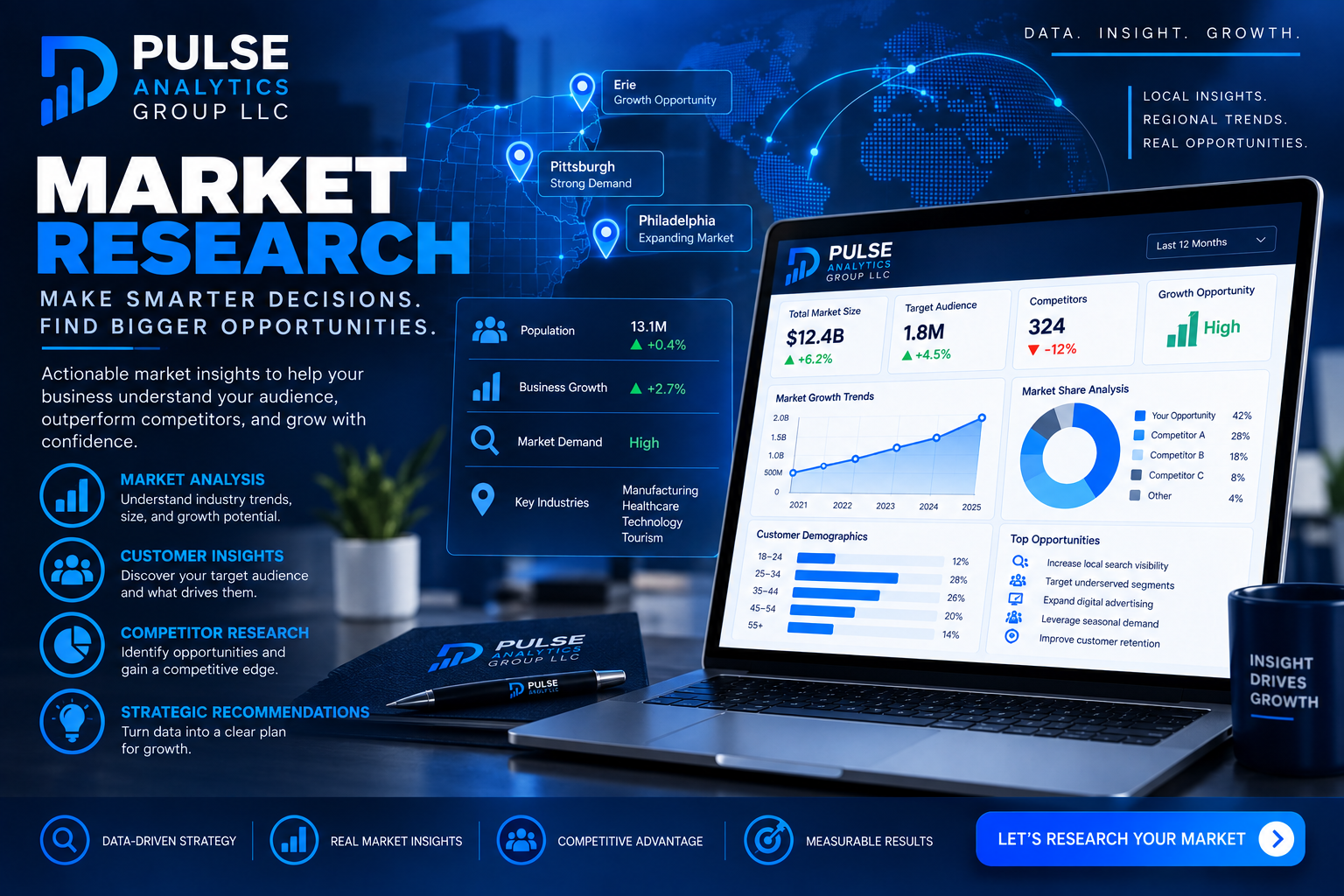
Your Competitors Are Already Competing for the Same Attention
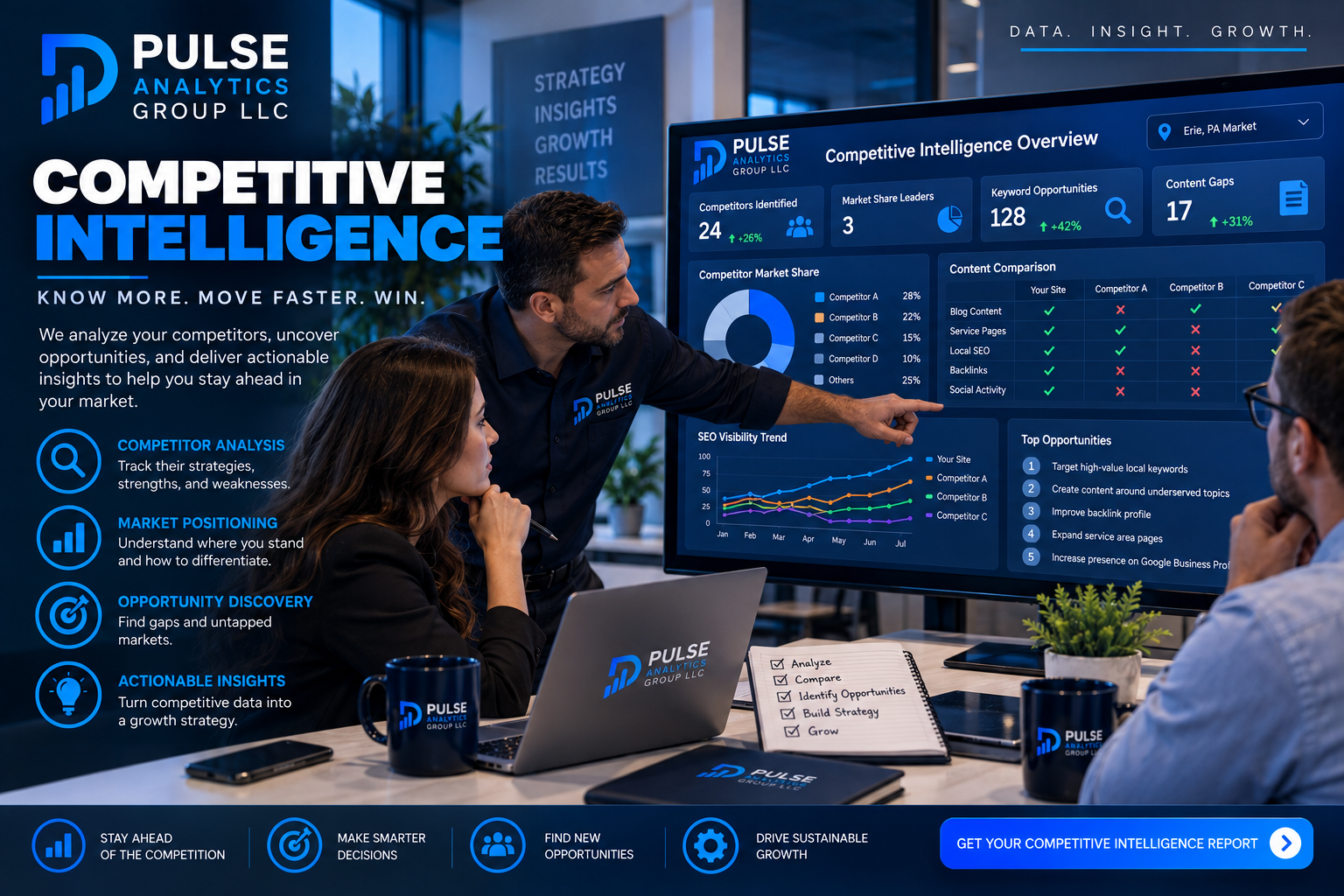
Understanding competitors provides valuable context for determining how your business should position itself in the market.
We examine competitor positioning, digital visibility, messaging, content, advertising presence, search visibility, offers, and other publicly observable marketing signals to identify competitive patterns and opportunities.
Find the People Most Likely to Need What You Sell
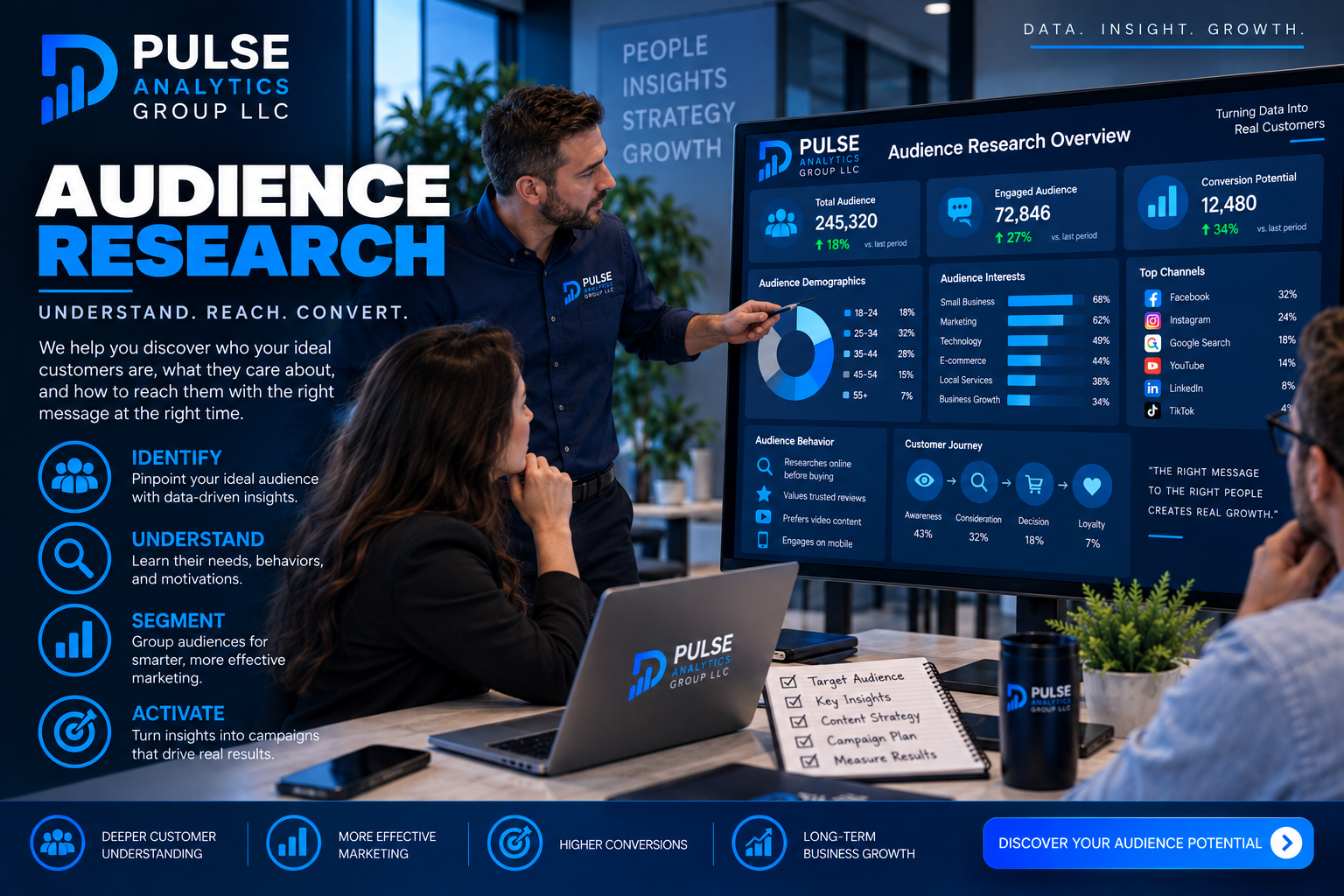
A lead generation strategy becomes more precise when the ideal customer is clearly defined.
We examine customer characteristics, needs, problems, search behavior, buying considerations, geographic factors, and other relevant signals to help establish meaningful audience segments.
Strategy Is Stronger When It Is Supported by Data
Effective lead generation requires more than creative ideas. It requires information.
We use a combination of digital marketing platforms, analytics systems, research tools, SEO technologies, advertising data, competitive intelligence resources, and business information to investigate opportunities and inform strategic decisions.
Tools do not replace expertise. They give expertise better information to work with.
Identify What Potential Customers Are Actually Searching For
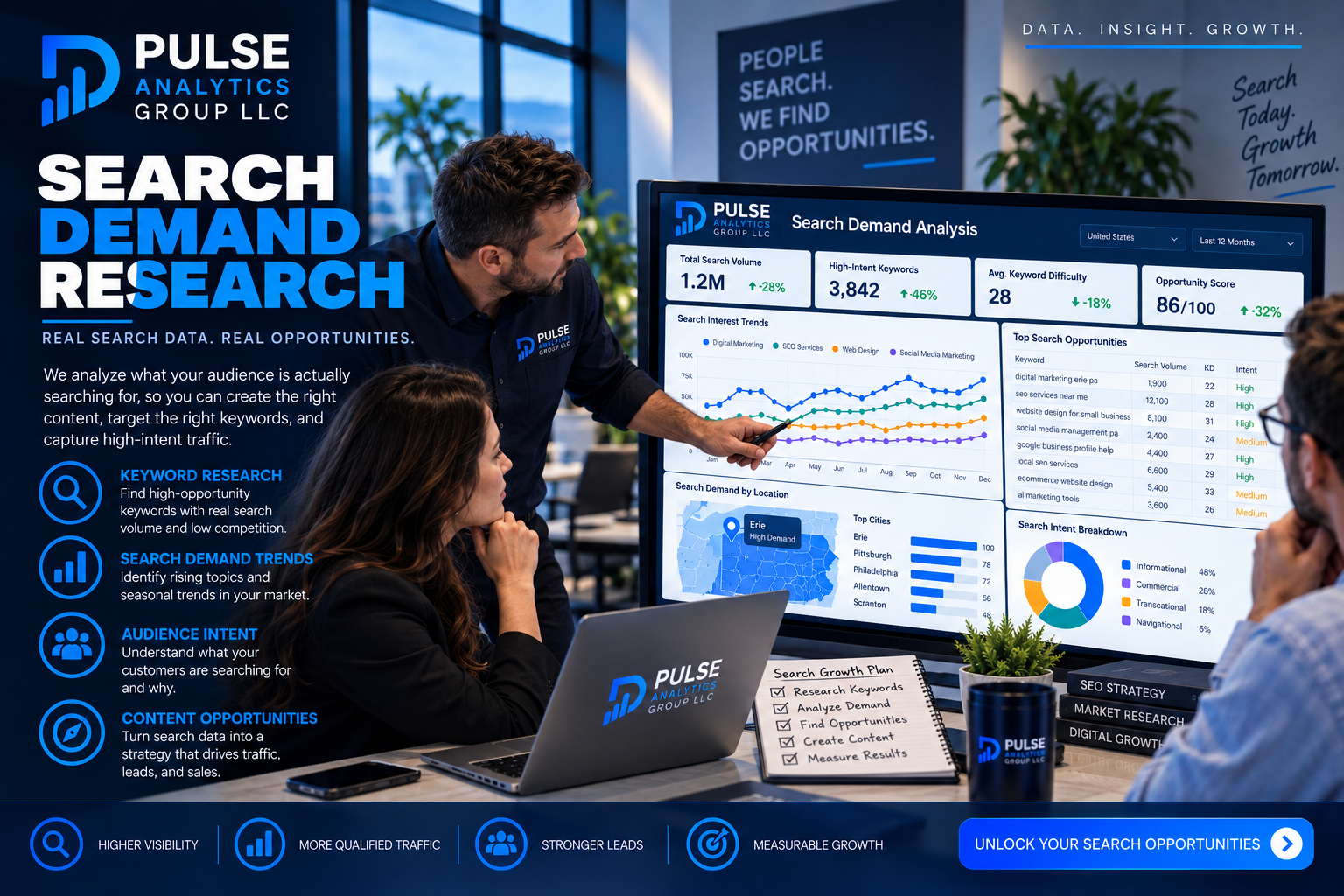
Search behavior can provide valuable insight into customer intent.
Keyword research, search trends, competitive visibility, search results, and related queries can help identify opportunities to place a business in front of people actively looking for relevant information, products, or services.
Put Your Lead Generation Where Your Customers Are
Different markets respond to different acquisition channels. Search, paid advertising, social media, email, referrals, content, direct outreach, and other channels can all play different roles.
We evaluate channel opportunities based on the audience, market, business objectives, competitive environment, available resources, and expected economics.
Give Prospects a Reason to Take the Next Step
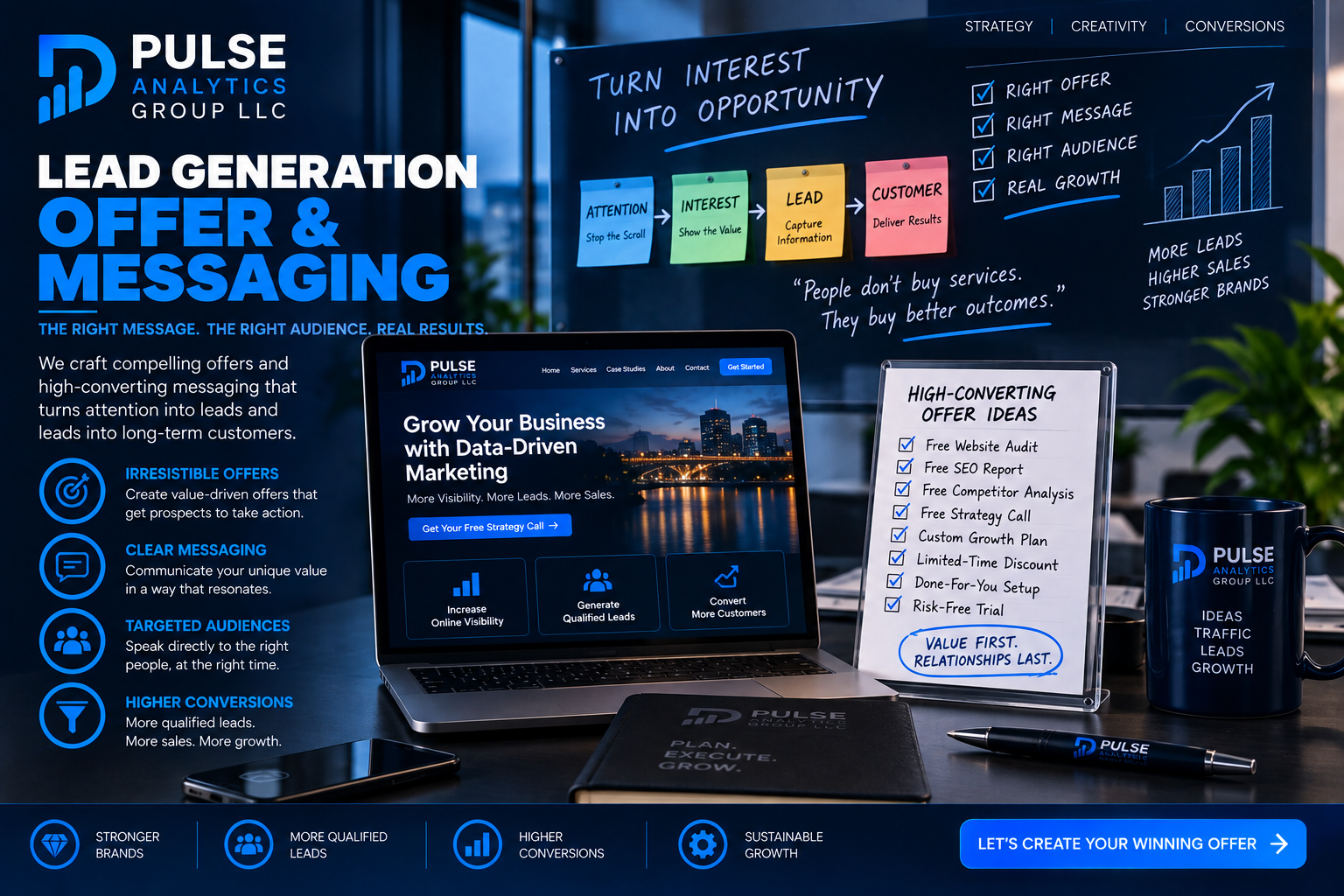
Getting someone to notice your business is only the beginning. The offer and message need to give the prospect a clear reason to continue.
We evaluate value propositions, calls to action, messaging, offers, landing pages, and customer pathways to reduce unnecessary friction between interest and conversion.
The Value of a Lead Depends on What Happens After Acquisition
Lead generation should be evaluated beyond the initial form submission or phone call. The economics become clearer when acquisition is connected to qualification, opportunity creation, customer conversion, and revenue.
Traffic Has to Go Somewhere
A successful acquisition campaign can still fail if the destination experience creates confusion, friction, or uncertainty.
Landing pages and conversion paths should align with the message that brought the visitor there and make the desired next step clear.
Capture the Opportunity When Someone Raises Their Hand
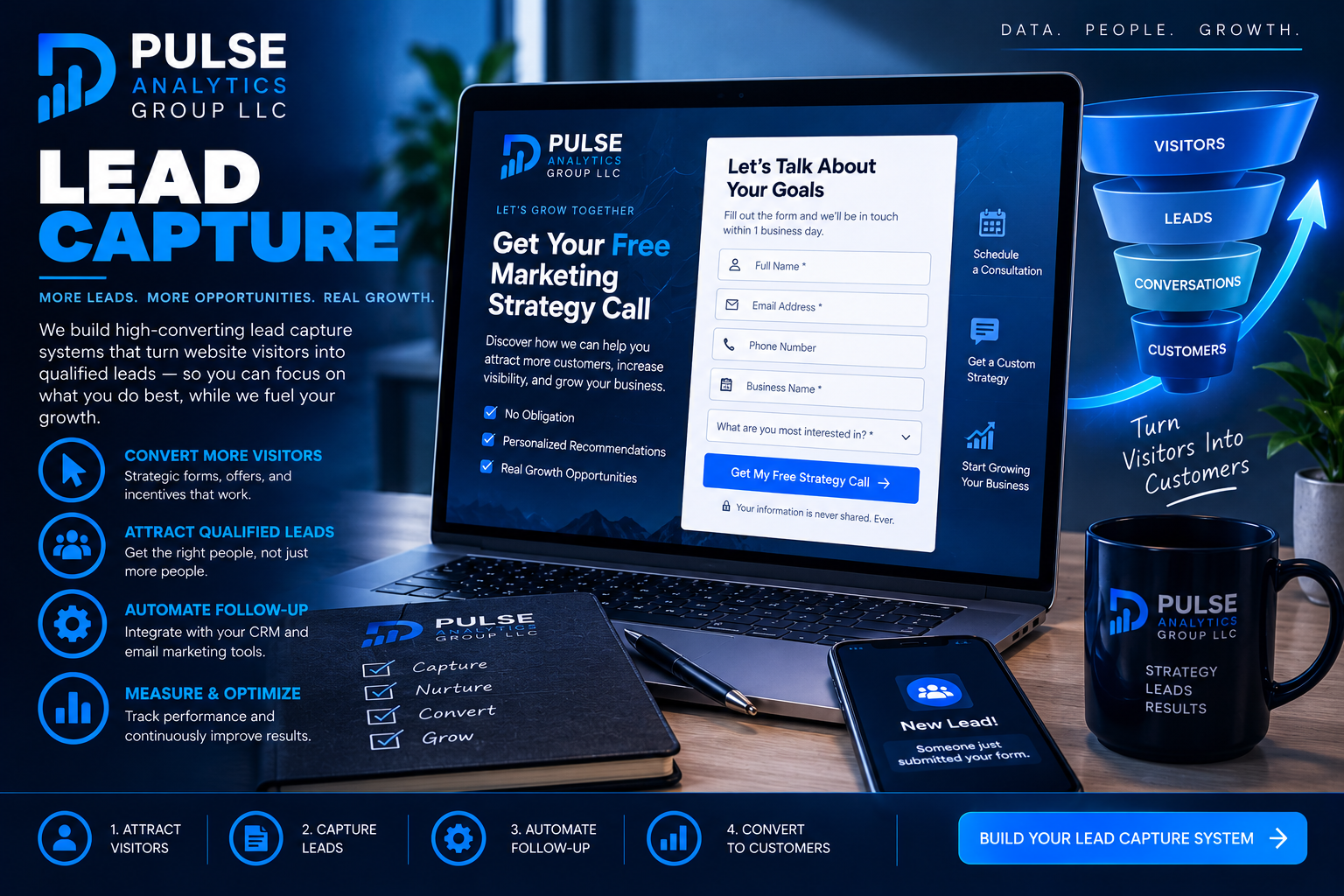
Once a prospect demonstrates interest, the system needs to capture that information reliably and move it into the appropriate workflow.
Lead forms, calls, appointment requests, consultations, downloads, and other conversion actions can become measurable lead events when the underlying systems are properly configured.
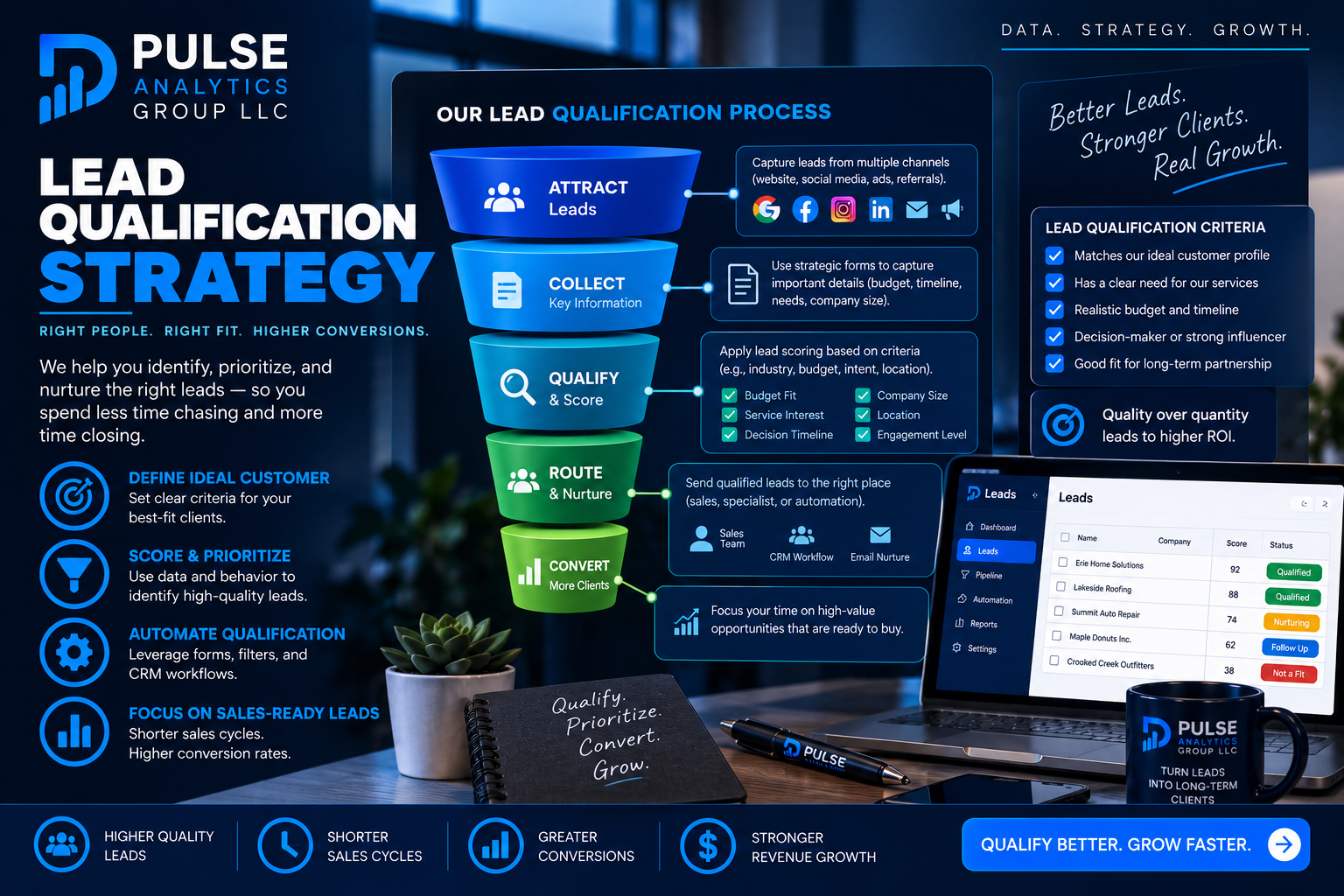
Not Every Lead Deserves the Same Response
Qualification helps distinguish between different levels of interest, fit, urgency, and commercial potential.
Depending on the business model, qualification may involve characteristics such as service needs, location, budget, timeline, industry, or other criteria relevant to the sales process.
Some Prospects Need More Time
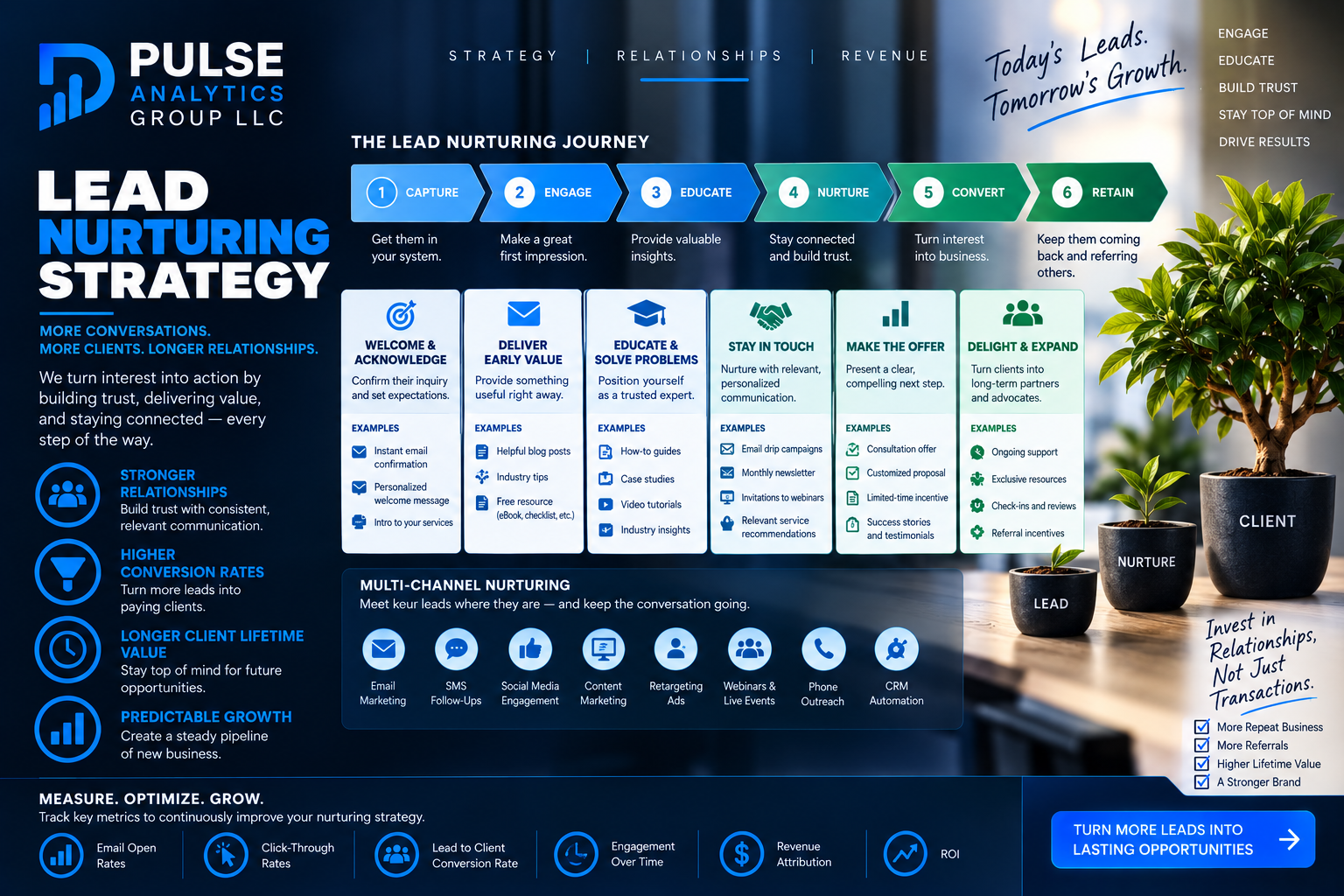
Not every prospect is ready to buy the moment they first encounter your business.
Lead nurturing creates opportunities to continue providing relevant information and maintain communication until the prospect is ready to take the next step.
Earn Attention Before Asking for the Sale
Effective inbound lead generation attracts prospects by answering questions, solving problems, demonstrating expertise, and providing useful information.
Search visibility, educational content, social media, resources, email, websites, and other digital experiences can work together to move a prospect from awareness toward consideration.
This approach aligns naturally with the inbound philosophy of attracting, engaging, and delighting the people a business is trying to serve.
Accelerate Demand With Targeted Advertising
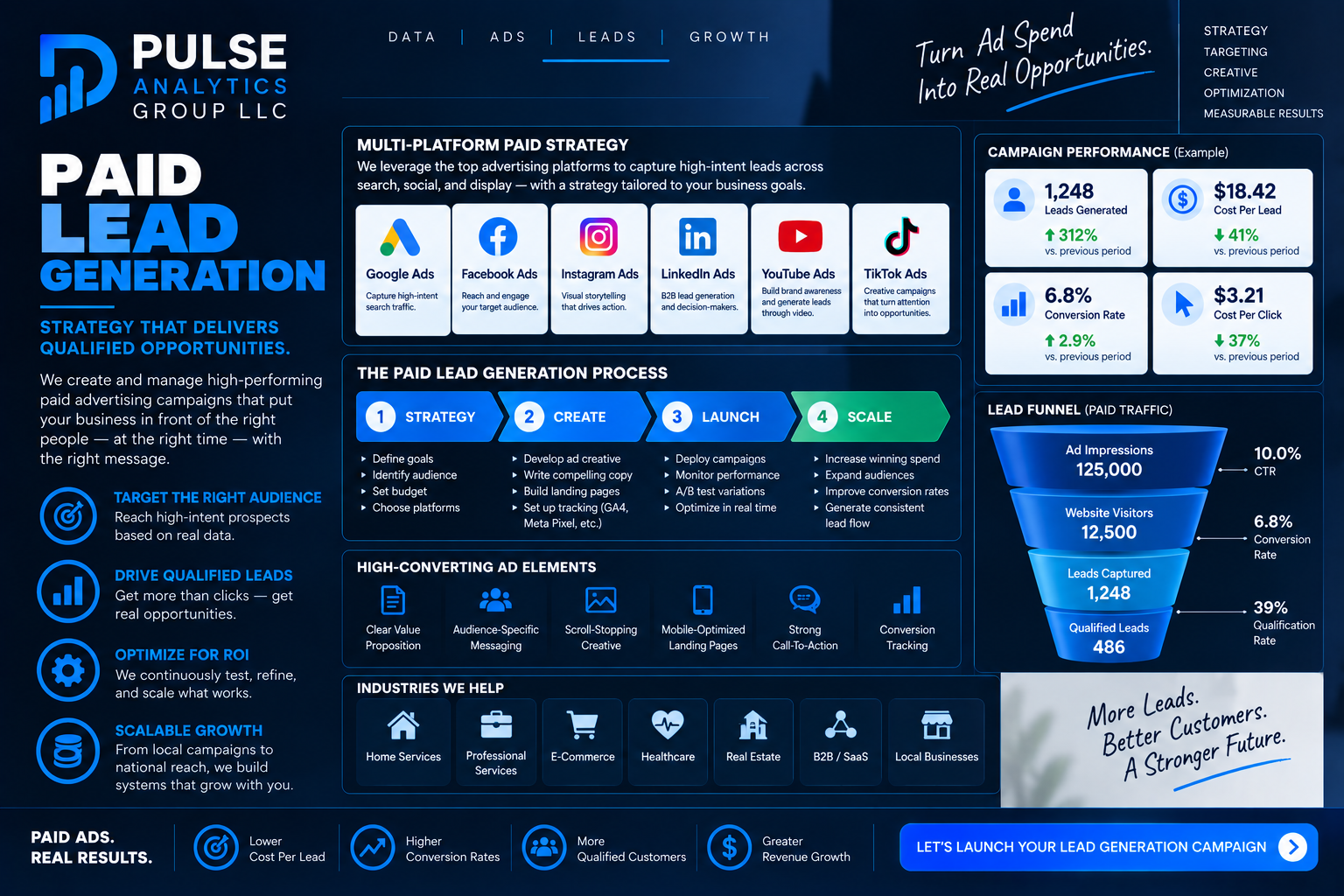
Paid advertising can place a business in front of highly relevant audiences much faster than organic visibility alone.
We develop paid acquisition strategies around audience targeting, search intent, messaging, creative, landing pages, conversion tracking, budget, and performance.
Google recommends mapping the complete lead-to-sale journey and identifying the stages that signal a higher probability of conversion before optimizing campaigns toward those outcomes. Google Ads — Generate leads with Google Ads .
If You Cannot Measure the Lead, You Cannot Properly Evaluate the Channel
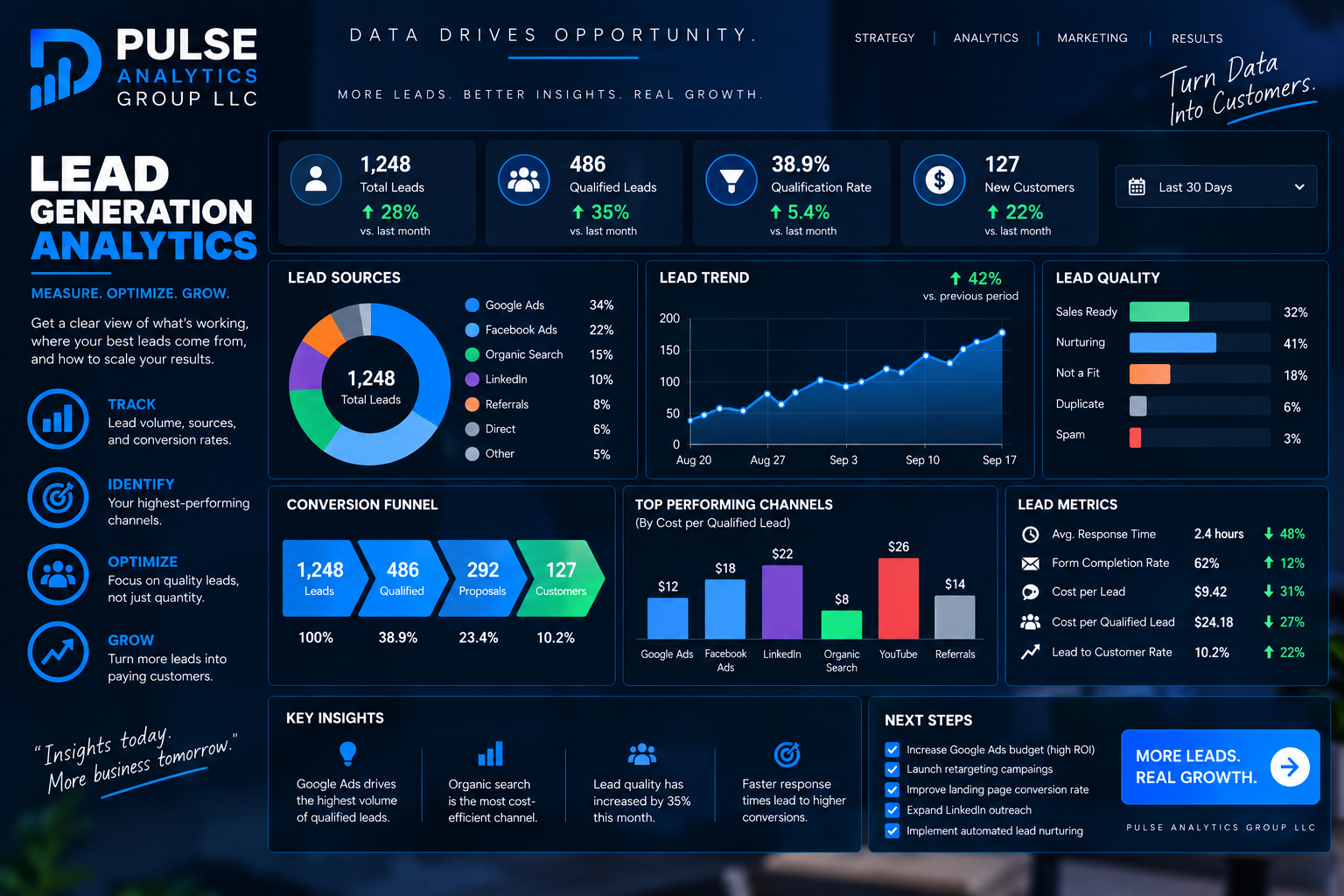
Lead generation requires reliable measurement. Traffic, clicks, impressions, engagement, forms, calls, appointments, and purchases all provide different pieces of information.
We connect acquisition activity with conversion measurement to help determine which channels and campaigns are producing meaningful outcomes.
This matters because modern lead-generation measurement increasingly needs to distinguish an initial lead from a qualified lead and, ultimately, a converted customer. Google Ads now supports explicit qualified-lead and converted-lead goals so campaign optimization can be connected to deeper stages of the sales journey.
Source: Google Ads Help — About qualified leads and converted leads .
Lead Generation Is a System, Not a Single Tactic
A successful lead generation strategy connects multiple stages of the customer journey.
Research. Technology. Marketing. Analytics.
Lead generation sits at the intersection of several disciplines. Understanding the market is not enough without knowing how to reach it. Marketing is not enough without measurement. Technology is not enough without strategy.
Pulse Analytics brings these disciplines together to create lead generation systems based on research, execution, measurement, and continuous improvement.
Your Sales Knowledge Makes the Strategy Better
We can research the market, analyze competitors, study search behavior, evaluate channels, and build the technical infrastructure—but your team knows the customer from a perspective no external system can completely replicate.
Your knowledge of objections, buying behavior, customer questions, profitable customers, sales cycles, and operational realities is essential to building a lead generation system that actually works.
That is why we collaborate with the people responsible for sales and customer relationships throughout the process.
The goal is not to replace sales judgment with automation. It is to connect the knowledge of the people closest to the customer with better market information, measurement, and acquisition infrastructure.
Lead Generation Solutions Can Include
- Market research
- Competitive intelligence
- Audience research
- Ideal customer profile development
- Search demand research
- SEO lead generation
- Paid advertising
- Social media acquisition
- Landing page strategy
- Conversion optimization
- Lead capture
- Lead qualification
- Lead nurturing
- CRM workflows
- Analytics and attribution
The Objective
- Reach more qualified prospects
- Improve acquisition efficiency
- Create stronger conversion paths
- Improve lead quality
- Reduce wasted marketing spend
- Improve visibility into acquisition performance
- Build a repeatable acquisition system
Lead Generation Connects the Entire Marketing Ecosystem
SEO can create visibility. Advertising can create immediate traffic. Social media can create engagement. Content can create authority. A website can create the conversion experience. Analytics can tell us what happened.
Lead generation brings those capabilities together around one objective: creating qualified opportunities for the business.
Stop Chasing Leads. Start Building a Lead Generation System.
The strongest lead generation strategies are built on research, relevance, clear positioning, effective acquisition channels, strong conversion experiences, reliable measurement, and continuous optimization.
Pulse Analytics Group can help you identify the opportunity, understand the market, reach the right audience, and build the systems necessary to turn attention into qualified business opportunities.