Turn Your Advertising Budget Into a Strategic Growth Tool
Google Ads can put your business in front of customers at the exact moment they are searching for what you offer. But successful advertising requires more than launching a campaign. It requires strategy, measurement, continuous optimization, and a clear understanding of how every advertising dollar is being used.
Google Ads Search Professional
Google Ads Search Professional Certification
Specialized training and demonstrated knowledge in Google Search advertising.
Your Advertising Budget Deserves Professional Management
When you invest money into Google Ads, you are not simply paying for clicks. You are investing in a system that should generate measurable business opportunities.
That requires someone who understands how search campaigns are structured, how bidding systems work, how conversion data influences optimization, and how campaign performance should be evaluated.
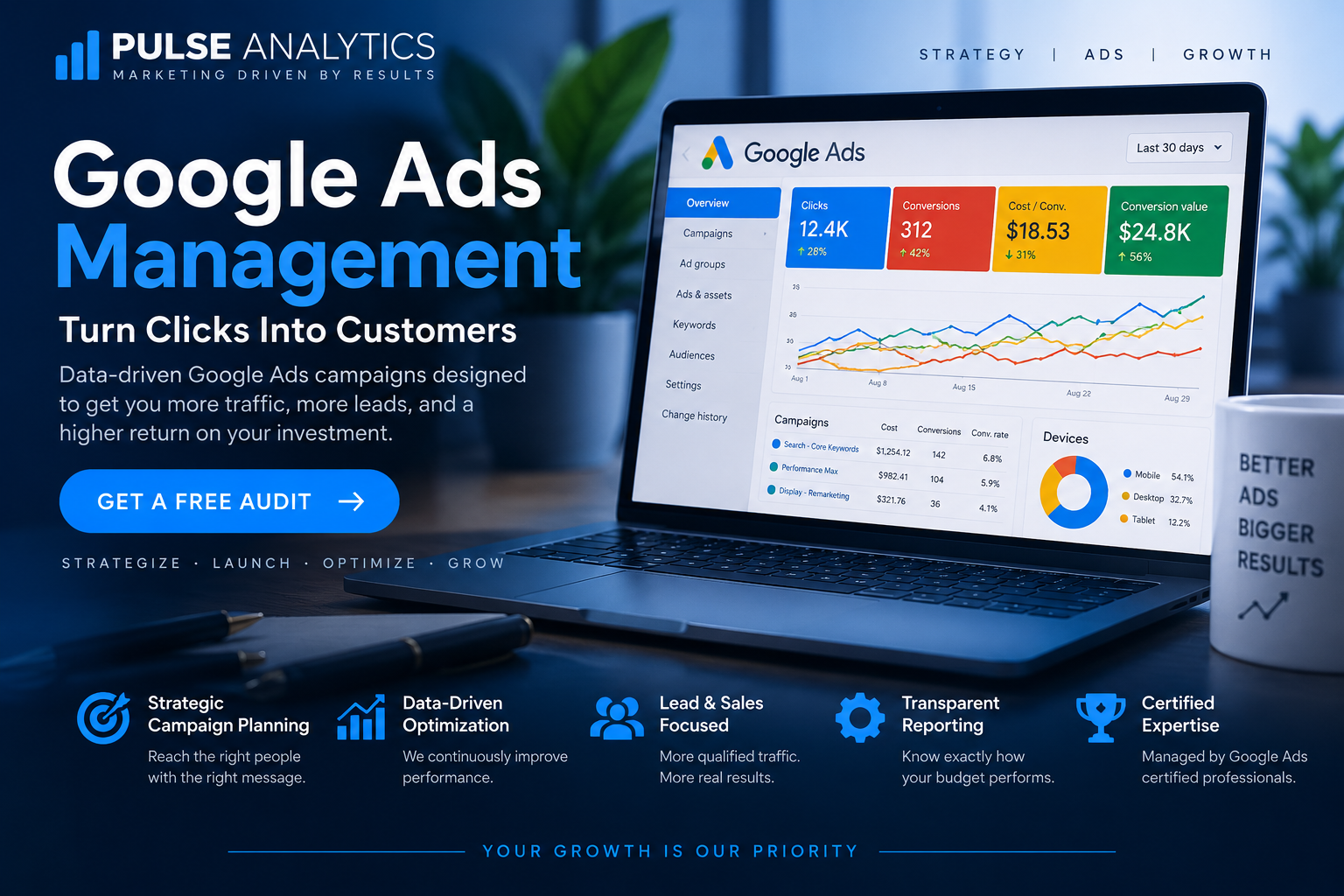
Pulse Analytics Group approaches Google Ads as a professional marketing discipline — combining certified platform knowledge with analytics, conversion measurement, and business strategy.
Paid Search Is a Real-Time Competition for Relevance
Google Ads is not simply a system where the highest bidder wins. Every eligible search enters an auction in which Google evaluates factors including the bid, ad and landing-page quality, the expected impact of assets, Ad Rank thresholds, the context of the search, and the competitiveness of the auction. Google explains the Ads auction .
That has an important implication for advertisers: increasing a budget does not replace the need for relevance. Strong campaign management is about improving the relationship between the search, the advertisement, the landing experience, the conversion goal, and the amount the business is willing to invest.
What Influences a Google Ads Auction?
Bid
The advertiser's willingness to compete for an eligible opportunity.
Ad & Landing Quality
Relevance and usefulness of the ad and the destination experience.
Ad Assets
Additional information that can make an advertisement more useful and actionable.
Search Context
Signals such as location, device, time, search terms, and other contextual information.
Competition
Other advertisers competing for the same eligible search opportunity.
Ad Rank Thresholds
Minimum quality and relevance thresholds that influence whether an ad can appear in a position.
Source: Google Ads Help — How the Google Ads auction works .
Automation Can Scale the Work. Strategy Still Determines What It Should Optimize.
Google Smart Bidding uses machine learning to optimize bids for conversions or conversion value at auction time. Google describes strategies including Maximize Conversions, Target CPA, Maximize Conversion Value, and Target ROAS as Smart Bidding strategies.
That technology is powerful, but automation is only as useful as the goals, conversion data, campaign structure, and business context surrounding it. Pulse Analytics treats Google's automation as a tool within a larger strategy—not as a substitute for professional judgment.
Google also recommends accurate conversion measurement as a foundation for Smart Bidding. That makes the connection between Google Ads and the Analytics & Reporting service especially important.
Strategy Starts Before the First Impression
A strong Google Ads account begins with a clear definition of what the campaign is supposed to accomplish. From there, structure, targeting, keywords, messaging, budgets, conversion actions, and landing pages can be designed around the same objective.
The Most Important Question Is What Happens After the Click
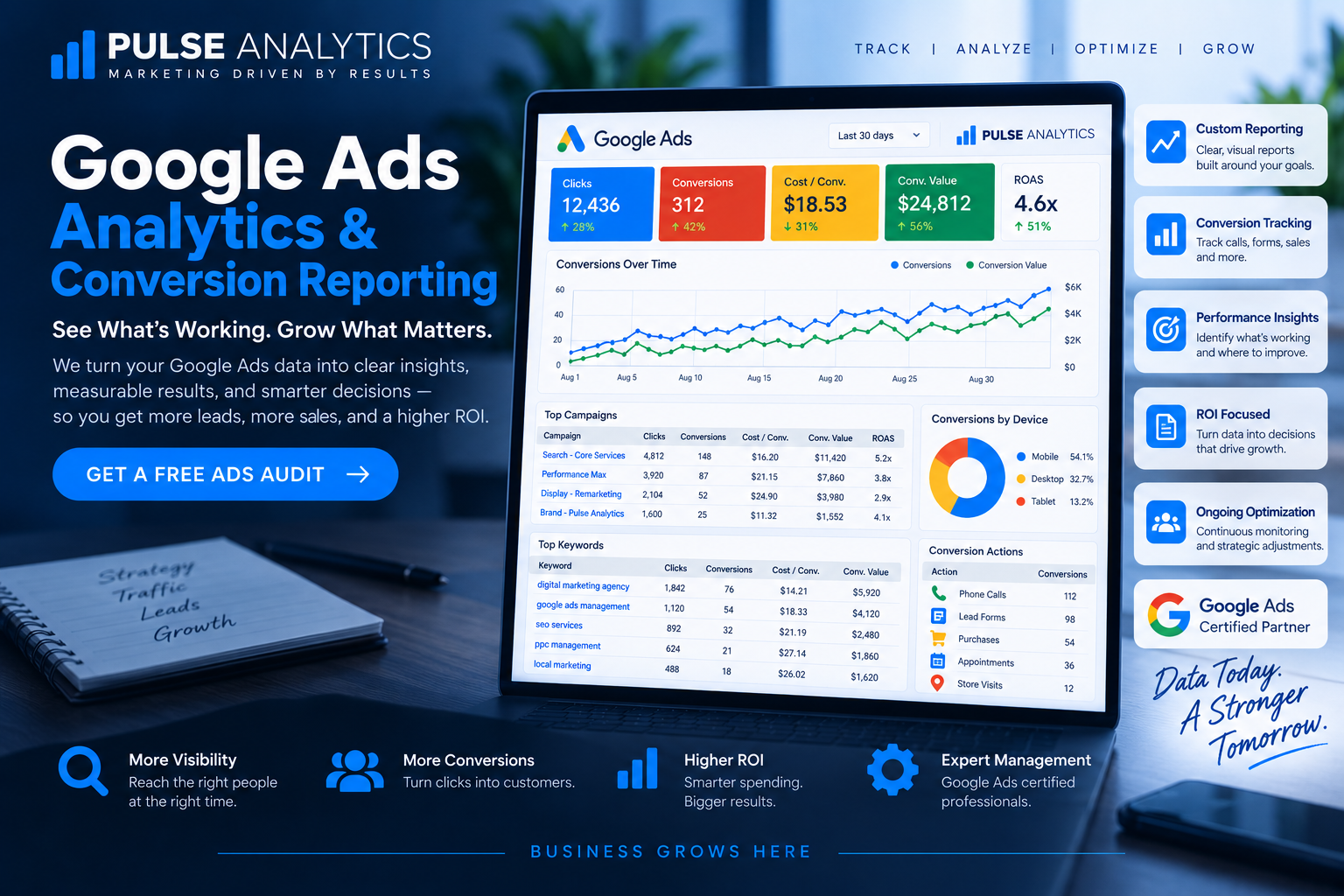
A click is an interaction, not a business result. A professional Google Ads program needs to understand what happens after a person reaches the website: whether they call, submit a form, purchase, book, request information, or take another action that matters to the business.
Conversion measurement gives Google Ads the information it needs to evaluate performance and gives the business a clearer basis for deciding where advertising dollars should go next.
Good Campaign Management Includes Knowing When Not to Spend
Advertising should have a purpose. If targeting, measurement, landing-page relevance, or economics do not support the campaign's objective, the answer is not automatically to increase the budget.
Pulse Analytics evaluates paid search in the context of the larger marketing system. That can mean refining a campaign, improving a landing page, strengthening conversion tracking, changing the objective, or determining that another channel is better suited to the business at a particular stage.
Platform Knowledge Matters When Advertising Real Money
Google Ads is a sophisticated advertising platform. Campaign management involves understanding account structure, search behavior, bidding, conversion measurement, policy, reporting, and optimization.
Pulse Analytics brings formal Google Ads Search Professional certification together with broader marketing, analytics, website, and technical knowledge. The goal is not simply to operate the platform, but to understand how paid search fits into the business it is supporting.
Google Ads Search Professional
Google Ads Search Professional Certification
Specialized Google Ads Search training and demonstrated platform knowledge.
Google Ads Is Easy to Start. It Is Much Harder to Manage Well.
Anyone can create a Google Ads campaign. The difference comes from what happens after the campaign goes live. Poor targeting, weak conversion tracking, irrelevant keywords, ineffective bidding, and wasted spend can quickly undermine an advertising budget.
Professional management focuses on continuously improving the relationship between your audience, your advertising, your landing pages, your conversion data, and your business objectives.
Build Campaigns Around What Your Business Actually Needs
A campaign should begin with a business objective, not simply a list of keywords. We develop campaign structures around your goals, target audience, services, geographic markets, and available advertising budget.
This creates a foundation for more controlled targeting and clearer performance analysis.
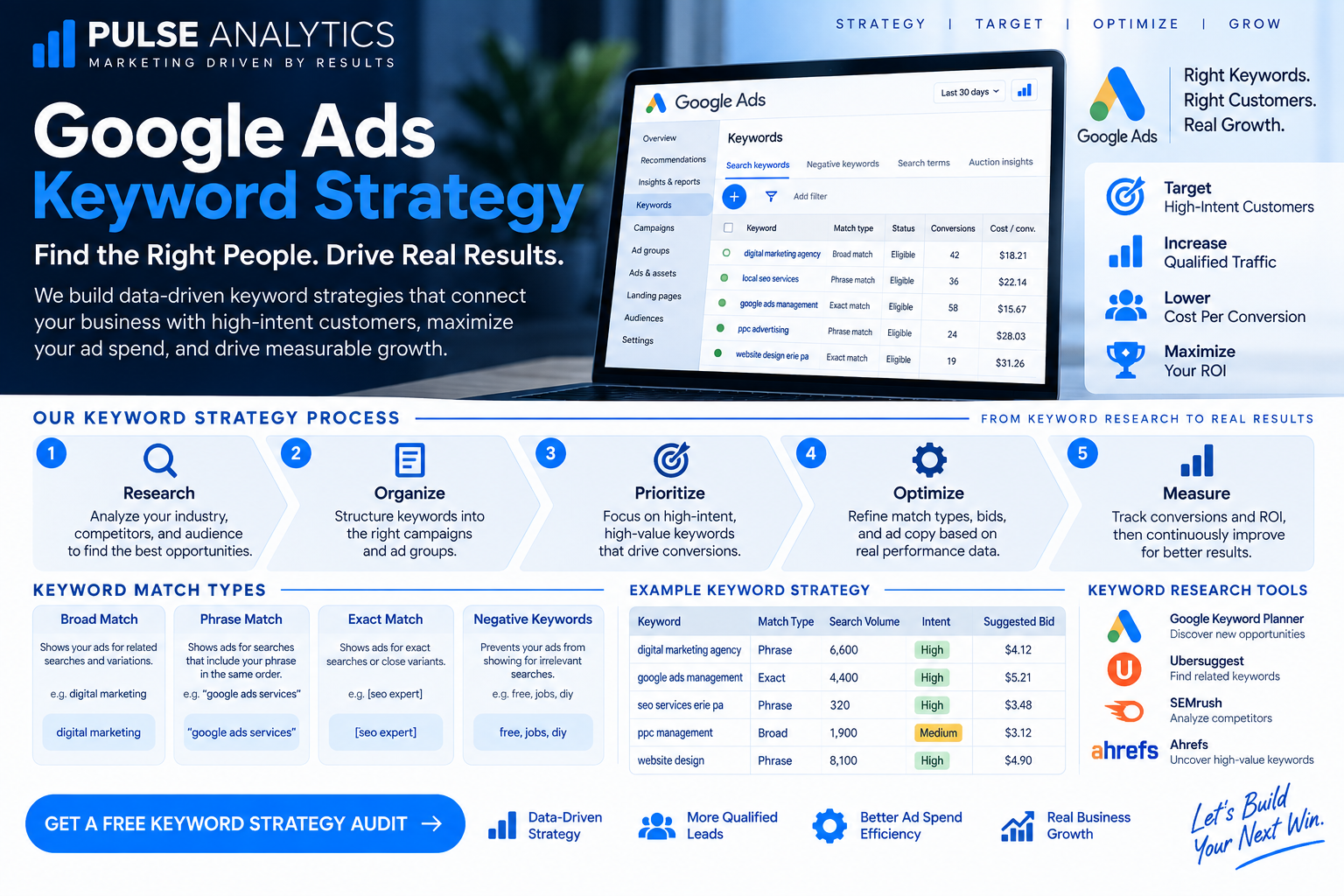
The Right Traffic Matters More Than More Traffic
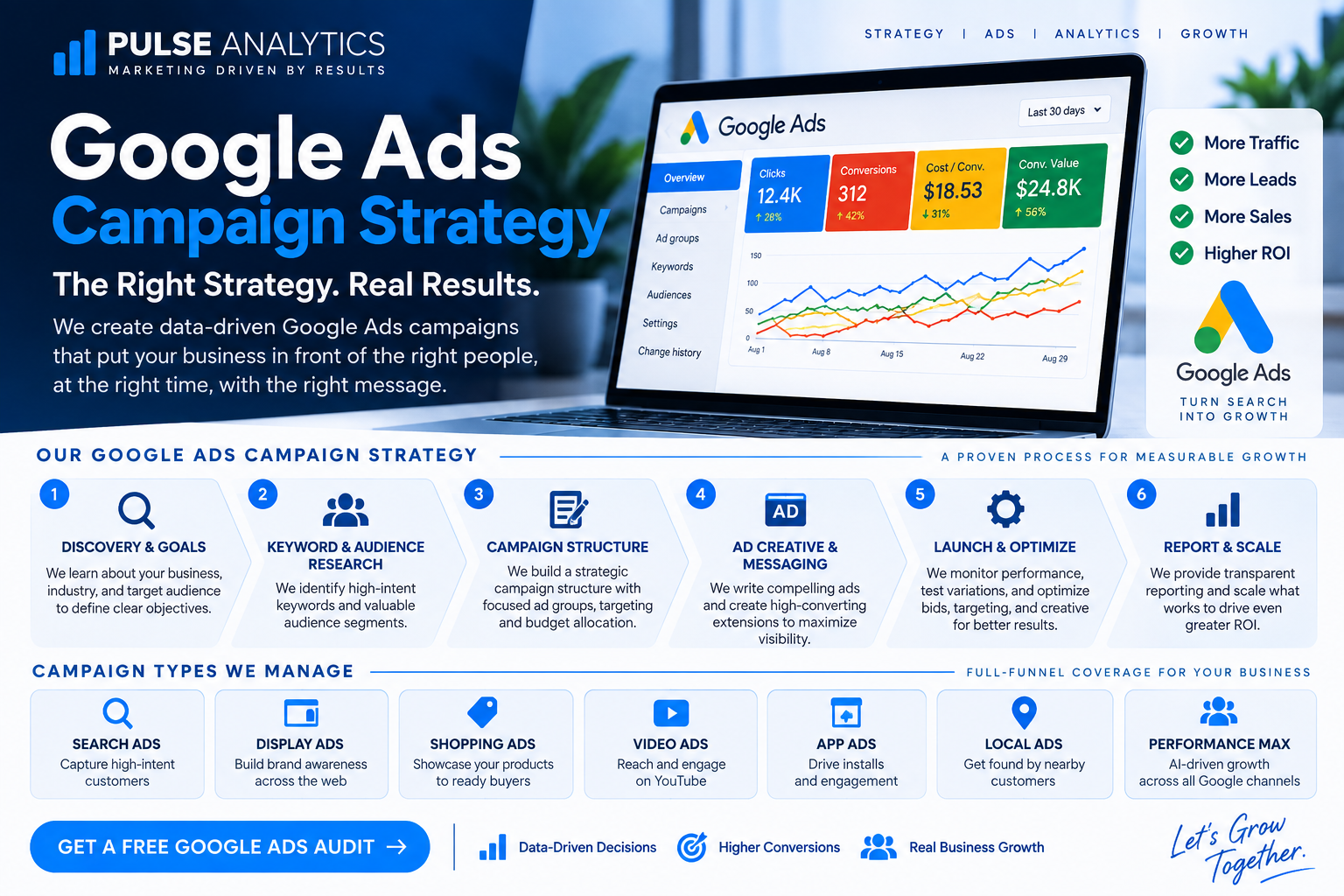
Search advertising works best when your ads are shown to people whose search intent aligns with what your business actually offers.
We analyze keyword performance and search behavior to identify opportunities, reduce irrelevant traffic, and continuously refine campaign targeting.
Negative keywords are an important part of that process. They help prevent advertising spend from being directed toward searches that are unlikely to produce meaningful business results.
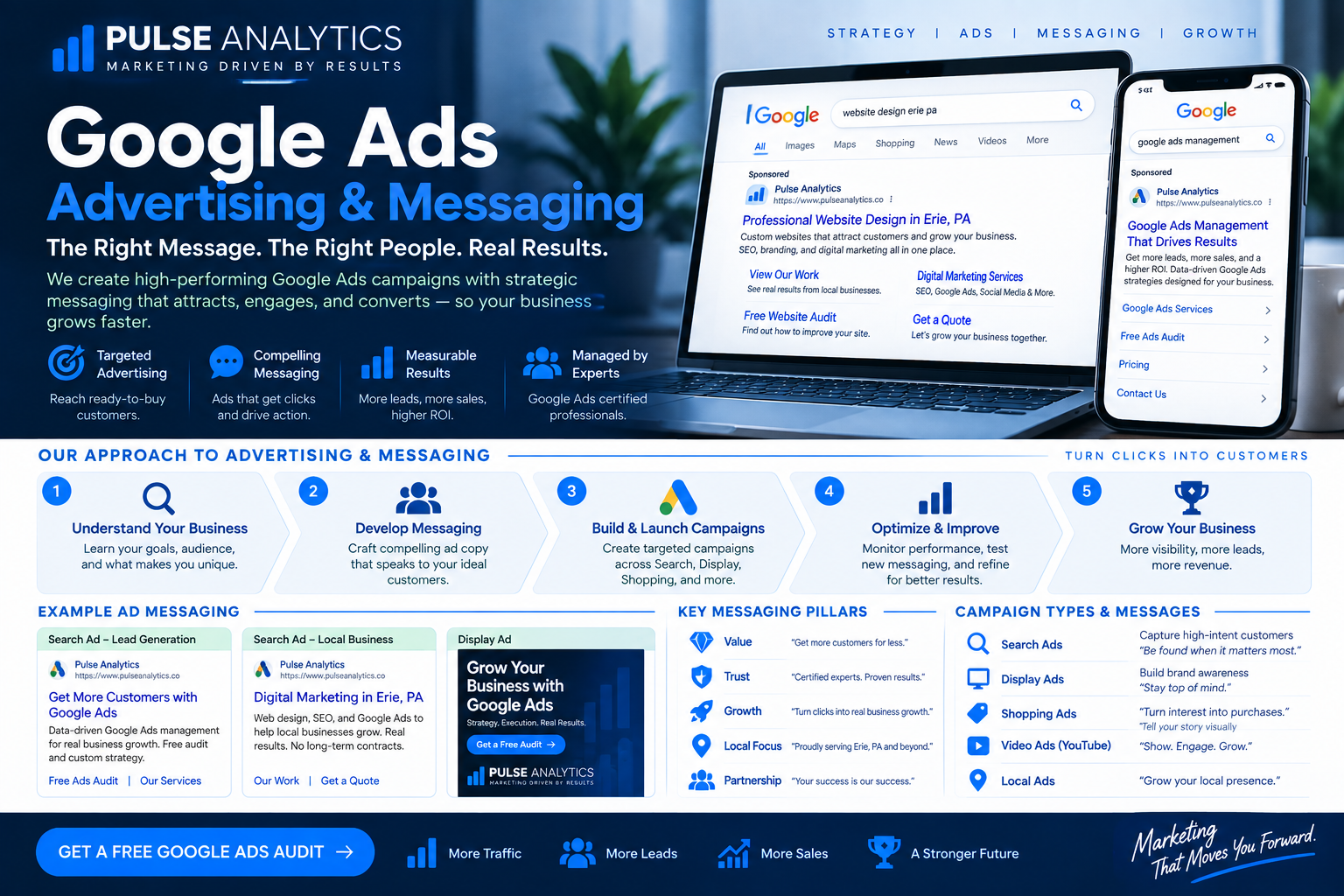
Your Ad Has to Earn the Click
Getting an impression is not enough. Your advertising needs to communicate a relevant message that connects the customer's search with the solution your business provides.
We develop and refine advertising messaging around relevance, customer intent, value propositions, and the action you want potential customers to take.
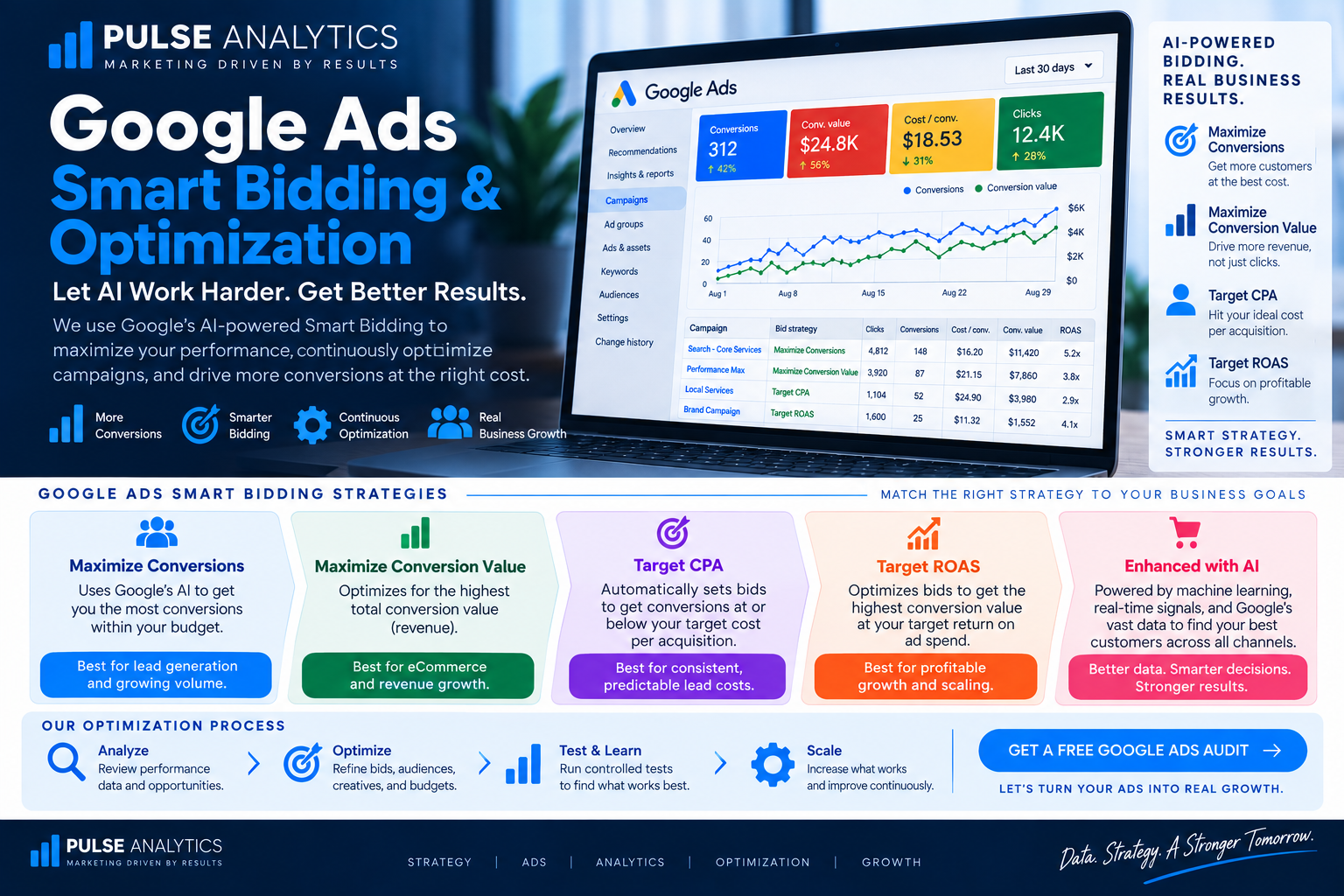
Automation Works Best When It Has Good Data Behind It
Google's Smart Bidding systems use machine learning to optimize bids for conversions or conversion value at auction time. Google says these systems use contextual signals and query-level performance data to make those decisions. But automation does not eliminate the need for professional oversight.
We evaluate bidding strategies in the context of campaign objectives, conversion data, budget, search intent, and overall account performance.
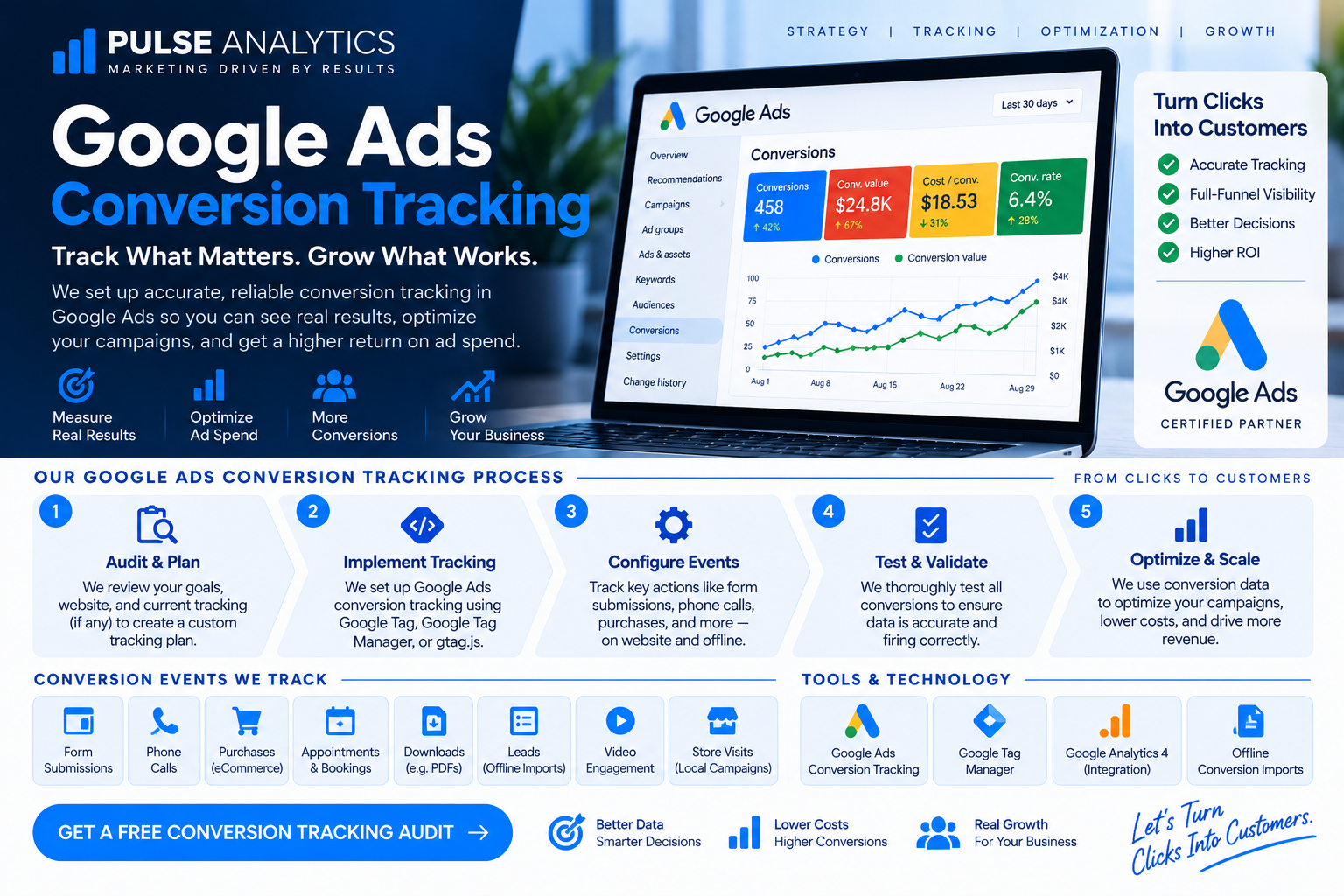
If You Cannot Measure the Result, You Cannot Properly Optimize It
Clicks and impressions tell only part of the story. The more important question is what happens after someone clicks your advertisement.
We connect advertising activity with meaningful conversion actions so campaign performance can be evaluated against actual business objectives.
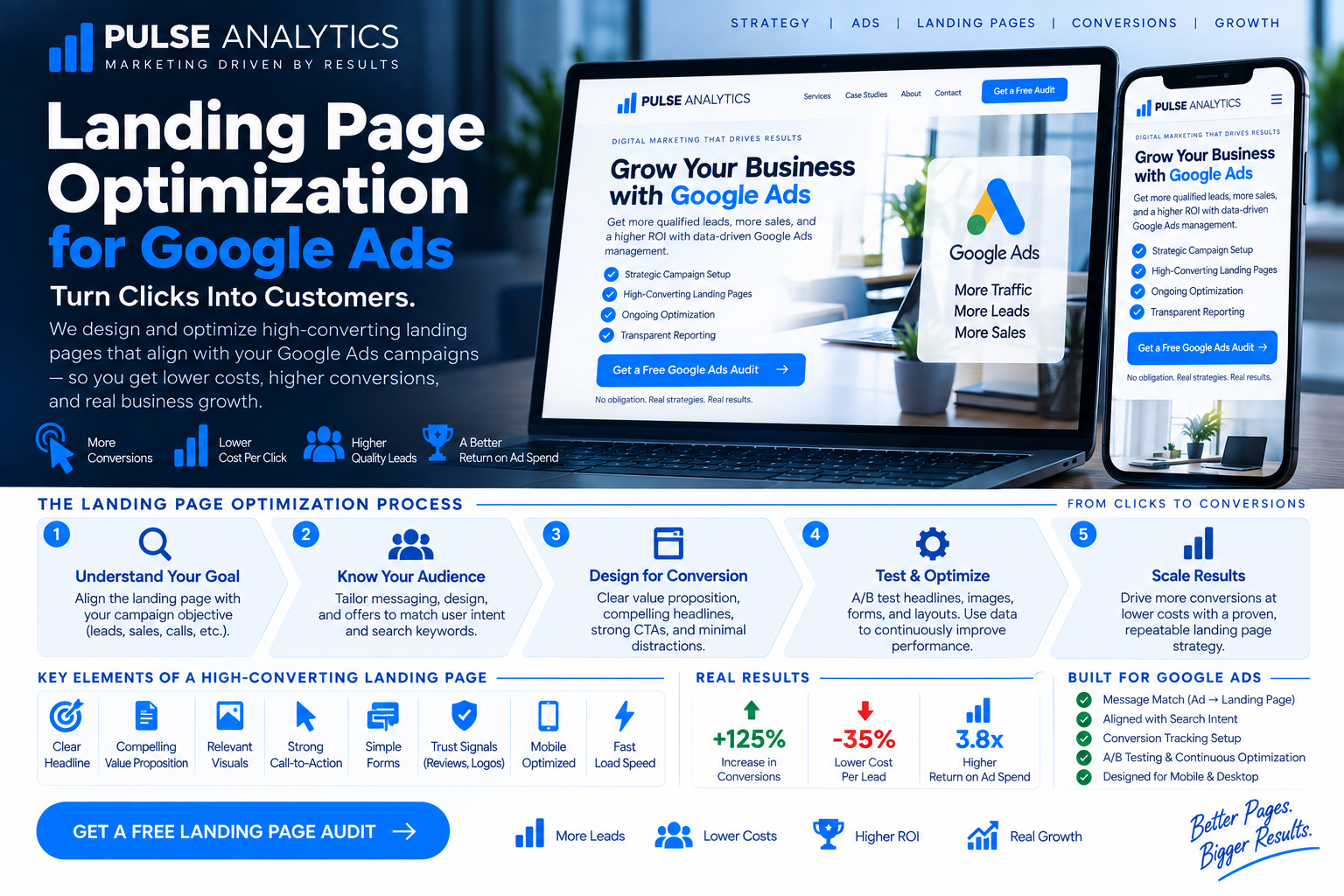
The Click Is Only the Beginning
Sending paid traffic to a poorly matched or confusing landing page can undermine an otherwise strong advertising campaign.
We evaluate the relationship between the search, advertisement, landing page, and desired conversion action to identify opportunities for a stronger customer experience.
Know Where Your Advertising Dollars Are Going
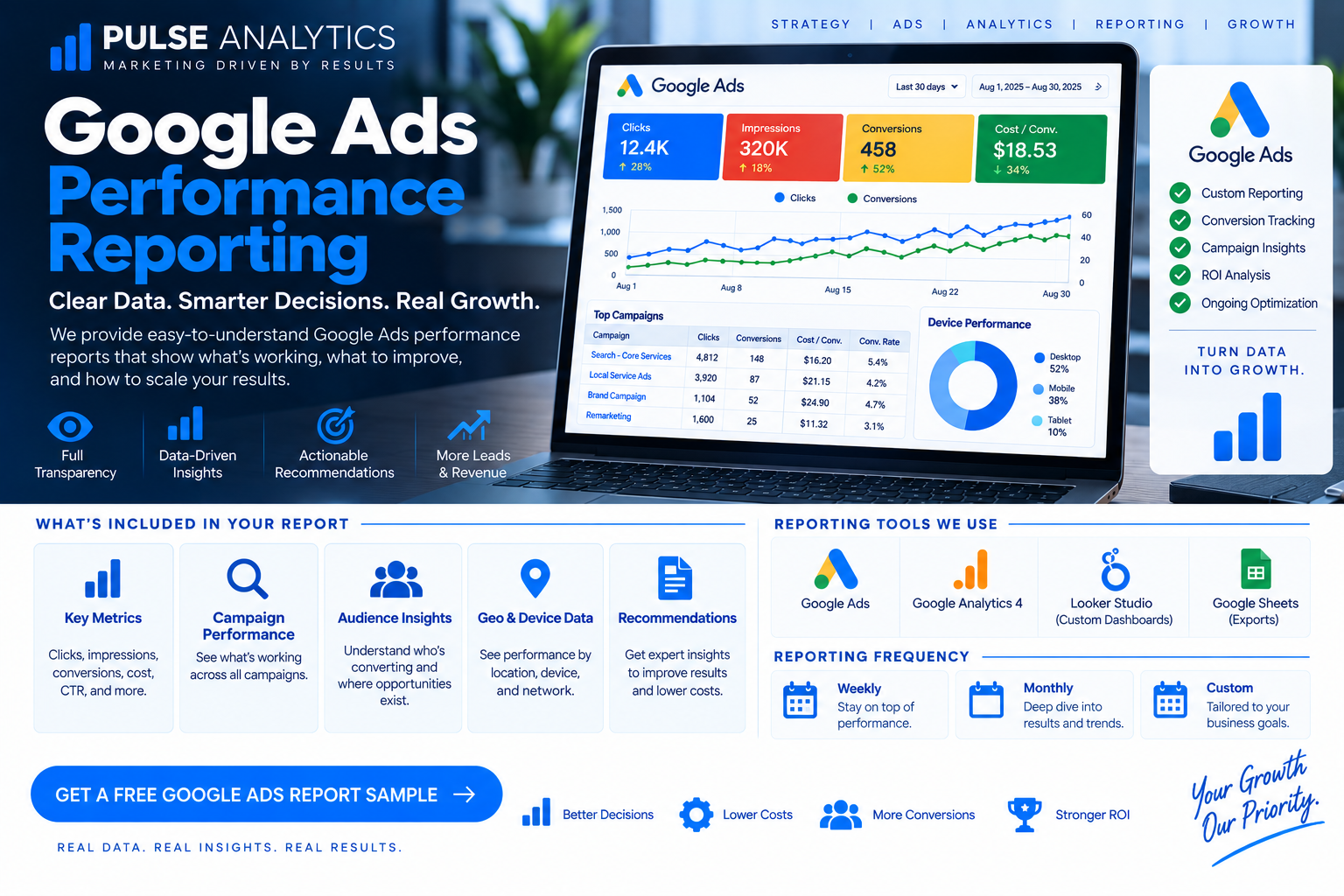
Reporting should do more than provide a collection of numbers. It should help explain what happened, why it happened, and what should happen next.
We connect campaign performance with the metrics that matter to your business and use those insights to identify opportunities for continued improvement.
Google Ads Management Backed by More Than Advertising
Paid advertising works best when it is connected to the rest of your digital marketing system. Our approach brings advertising, SEO, website performance, analytics, and conversion measurement together rather than treating each one as an isolated channel.
Build a Google Ads Program Around Your Business Goals
Your advertising budget deserves more than someone who knows how to launch a campaign. Work with a certified Google Ads professional who approaches paid search through strategy, measurement, optimization, and business objectives.