
Claim & Verify
Establish ownership and make sure the business is represented by the people authorized to manage it.
Local customers are already searching for the products and services you provide. Local SEO helps your business become more visible when those searches happen, while making it easier for potential customers to understand who you are, where you operate, and why they should choose you.
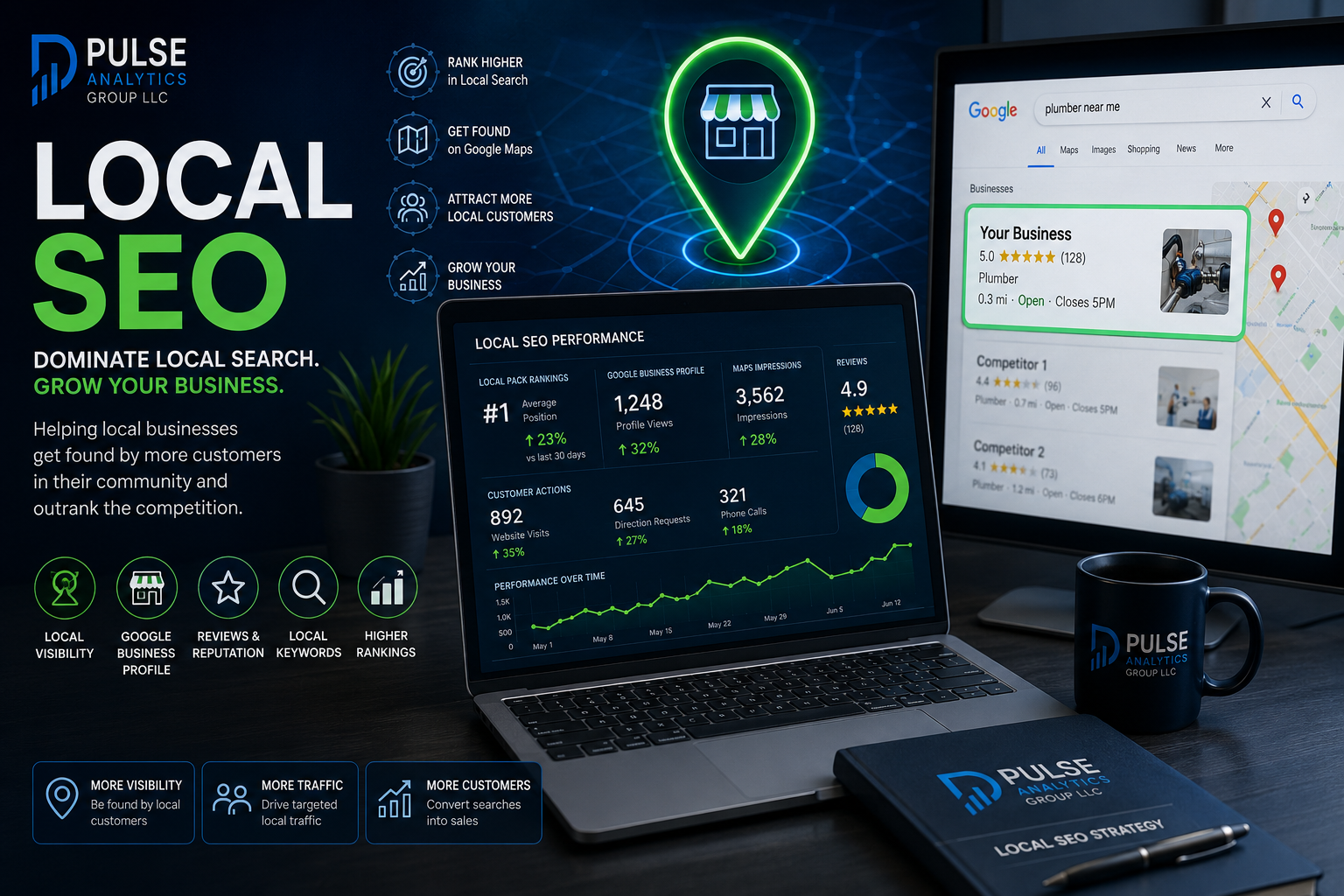
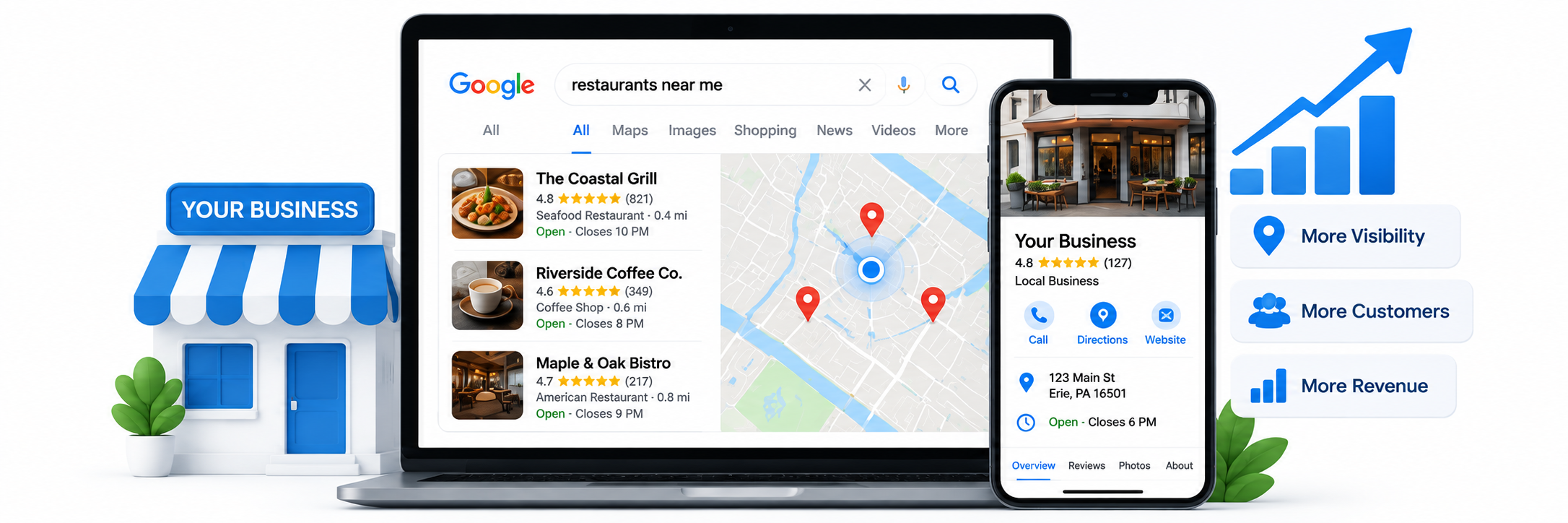
When someone searches for a nearby service, a local business, or a specific product in their area, the businesses that appear prominently in search results have an opportunity to earn that customer's attention.
But local visibility is not determined by one factor. Search engines evaluate a variety of signals when determining which businesses are relevant to a local search. Your website, business information, Google Business Profile, reviews, location relevance, and overall online presence can all contribute to how your business is represented in local search.
Local SEO brings those elements together into a coordinated strategy designed around the geographic markets your business actually serves.
A strong local search presence is built from more than a map listing. Customers need consistent, useful information about your business wherever they encounter it, while search engines need enough reliable signals to understand what you offer, where you operate, and which searches are relevant to your business.
Our local SEO strategy connects those signals across the parts of your digital presence that influence how your business is represented in local search. That includes your Google Business Profile, website, business information, local content, customer reviews, structured data, and other references to your business across the web.
The objective is not to manipulate one ranking factor. It is to create a consistent and trustworthy representation of the business that helps search engines understand it and gives potential customers the information they need to decide whether the business is relevant to them.
Google states that local results are primarily determined by relevance, distance, and prominence. That means local SEO is not a matter of inserting a city name into a page or creating a Business Profile and waiting for rankings to appear. It is the process of making the business easier for search engines to understand, easier for customers to evaluate, and more consistently represented across the web. Read Google's explanation of local ranking .
How well the business matches what the customer is searching for. Complete, detailed business information helps Google understand what the business does and which searches may be relevant.
How far the business is from the searcher or the location specified in the search. A business cannot simply optimize its way out of geography.
How well-known a business is. Google notes that signals such as links from other websites and reviews can contribute to prominence.
Source: Google Business Profile Help — Tips to improve your local ranking on Google .
Effective local SEO begins with understanding the business: what it offers, where it operates, who it serves, how customers search for it, and how competitors are represented in those markets. From there, optimization becomes a coordinated process rather than a collection of isolated tactics.
Google describes a Business Profile as the local storefront for businesses that appear in Google Search and Maps. It gives customers access to information such as location, contact details, hours, website, photos, and reviews. Google also combines information from the business, public web content, third parties, users, and other sources when building local search results. Learn about Google Business Profiles and how Google sources local business information .
That is why profile management should begin with accuracy and compliance—not keyword stuffing. Google specifically instructs businesses to represent themselves accurately, use their real-world business name, maintain an accurate address or service area, and choose the fewest categories necessary to describe the core business. Violating those guidelines can create serious profile problems. Review Google's Business Profile guidelines .
Establish ownership and make sure the business is represented by the people authorized to manage it.
Use an accurate physical location or properly configured service area that reflects how the business actually operates.
Select specific categories that describe what the business actually is rather than treating categories as a keyword list.
Keep hours, services, contact information, attributes, and other customer-facing details accurate and current.
Use useful, representative photos, videos, services, products where eligible, and other profile features that help customers understand the business.
Encourage authentic customer feedback, monitor reviews, and respond professionally to customer experiences.
Google explains that business information can come from the business itself, publicly available web content, licensed third-party data, user contributions, and Google's own interactions with a local place or business. See Google's explanation of its information sources .
That makes the broader digital presence important. Your website, business information, reviews, links, directories, local content, and Business Profile should reinforce the same underlying facts about the company.
Pulse Analytics evaluates those connections rather than treating local SEO as a single listing-management task.
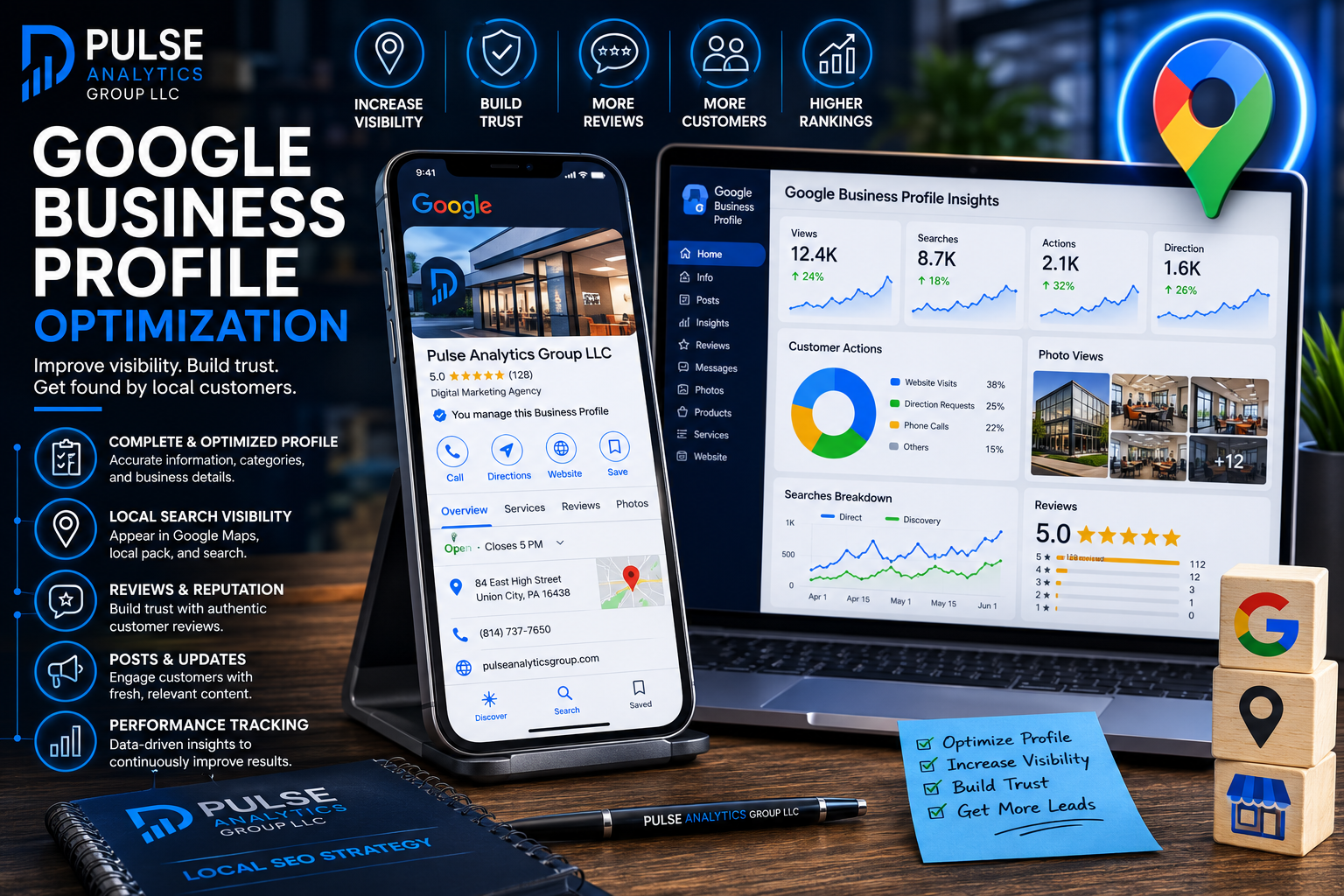
Your Google Business Profile is one of the most important components of a local search presence. It gives potential customers essential information about your business while providing Google with information that helps it understand your organization.
We help businesses develop and maintain accurate, useful, and strategically structured business profiles that accurately represent their services, locations, hours, and customer experience.
Local search behavior is shaped by more than the name of a city. Customers search for services, products, problems, neighborhoods, communities, and specific needs.
A strong local keyword strategy considers how customers actually search and how those searches relate to your services, locations, and commercial objectives. We use that information to identify opportunities for relevant local visibility.


Local search visibility does not stop at your business profile. Your website needs to clearly communicate what your business does, where you operate, and what customers can expect.
We optimize website content and structure so that your local presence is supported by a strong, useful website rather than relying on a single listing.
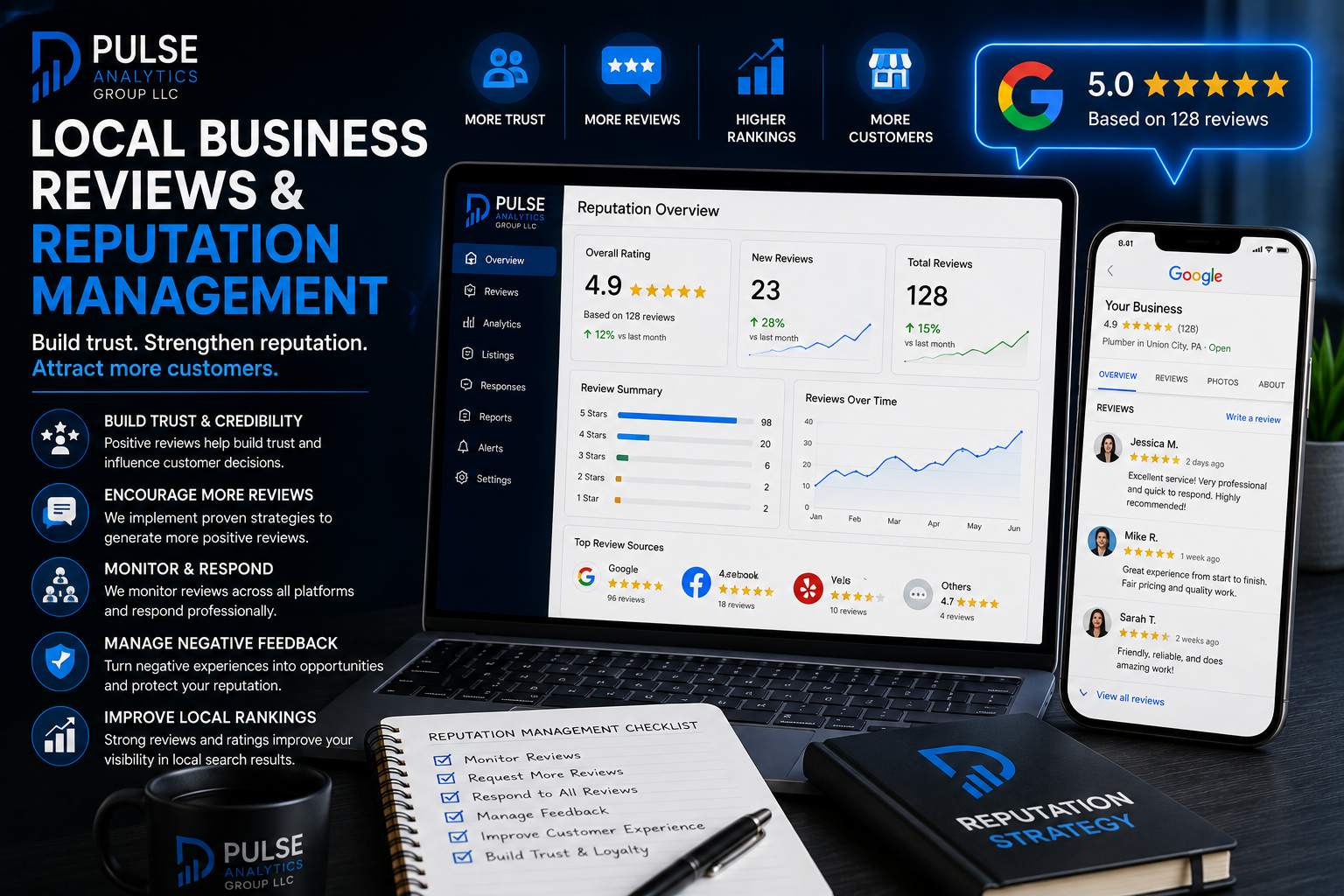
Local search is not simply about appearing in front of customers. Potential customers also evaluate the information they see before deciding which businesses deserve their attention.
Reviews and reputation can play an important role in that decision. We help businesses establish processes for monitoring and improving their online reputation while keeping customer feedback connected to the broader marketing strategy.
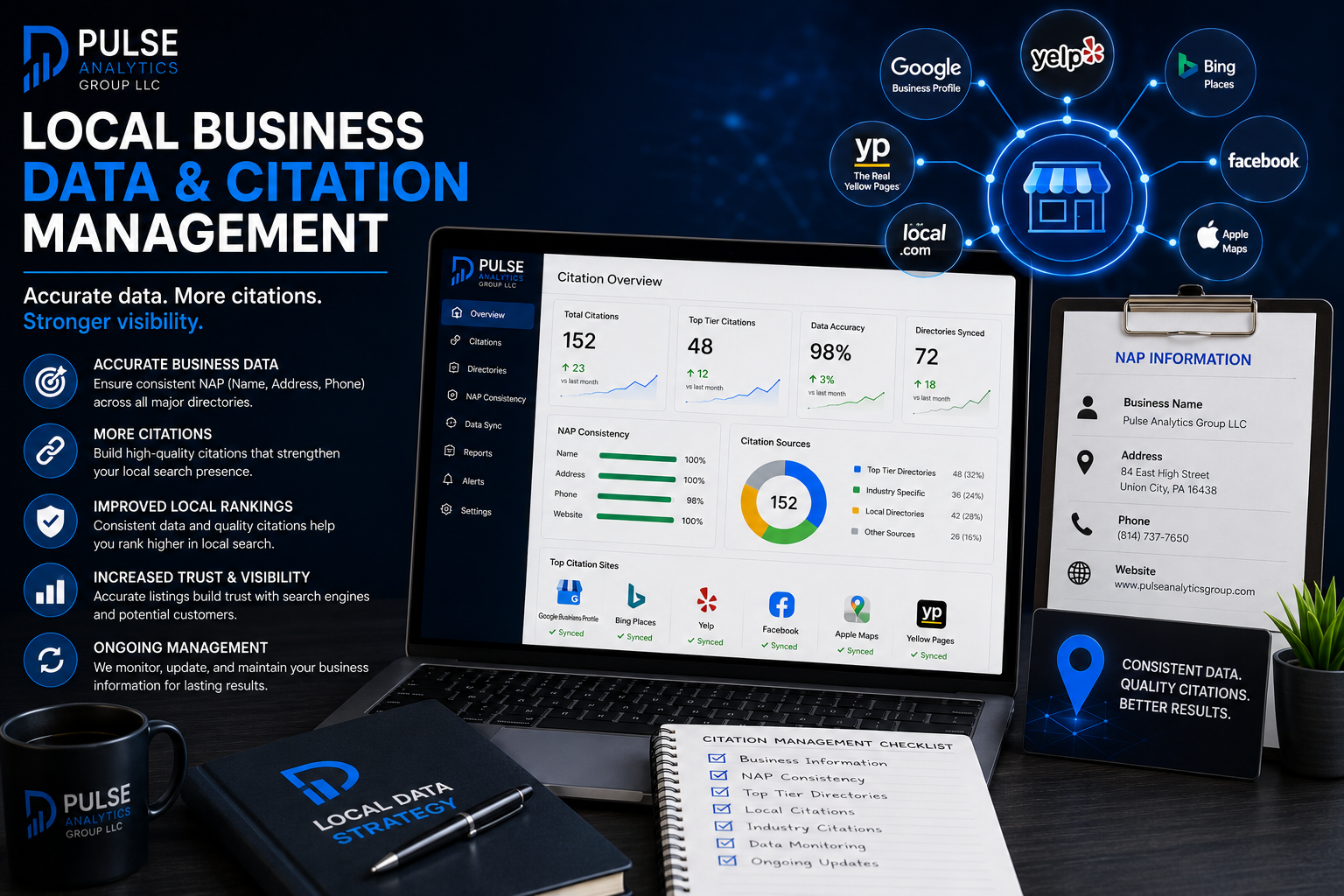
Customers should not have to wonder whether they have found the right business. Inconsistent names, addresses, phone numbers, hours, or other business information across the web can create confusion for both customers and search engines.
We evaluate your business information across relevant online properties and identify inconsistencies and opportunities that could weaken your local presence.
Strong local content is not about producing dozens of pages with a city name inserted into every paragraph. It should provide genuine value to the people and communities the business serves.
We develop content opportunities around customer questions, services, locations, community relevance, and search intent. The objective is to build a website that is genuinely useful while creating additional opportunities for relevant search visibility.
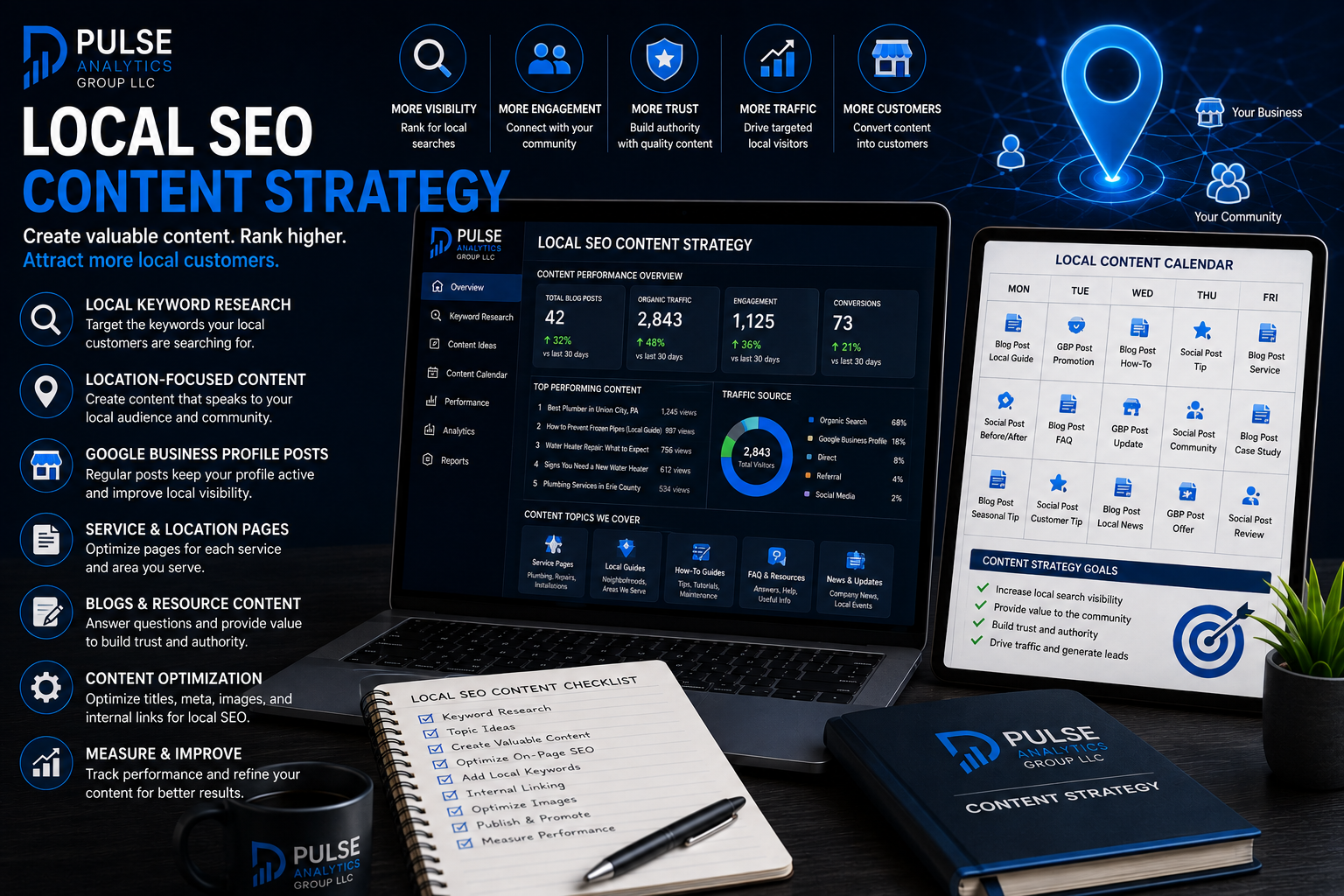
Local SEO extends into the website. Clear service pages, location information, internal linking, useful content, crawlable structure, and accurate business details give search engines additional context about the organization and the markets it serves.
Where appropriate, we can also use structured data to help search engines understand entities and business information. Google's Search Central documentation identifies LocalBusiness structured data as a way to communicate information about a local business, while emphasizing that structured data does not guarantee a special search appearance. Read Google's LocalBusiness structured data documentation .
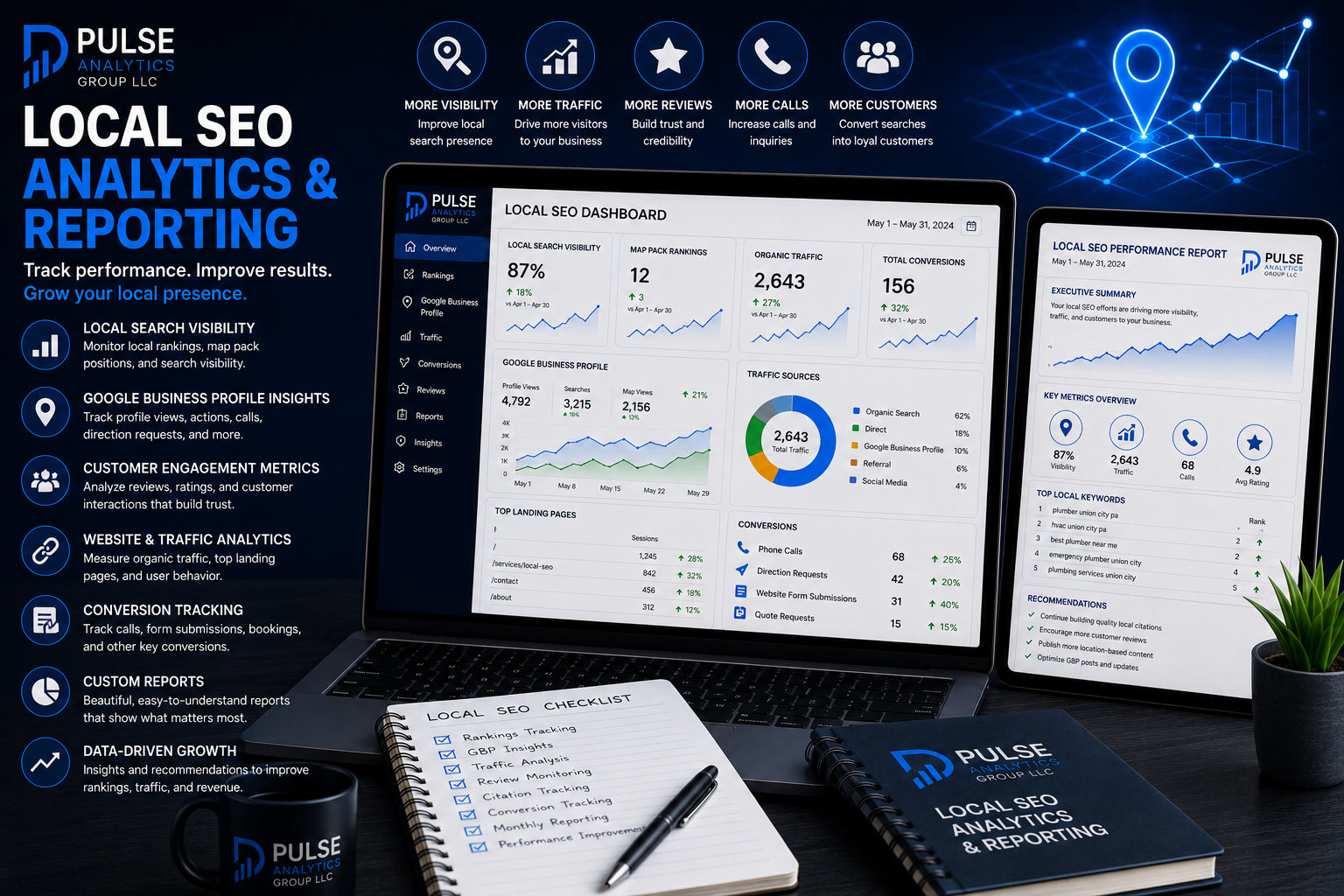
Local SEO should be measured against business objectives rather than vanity metrics alone. Visibility matters, but the larger question is whether that visibility is helping the business attract meaningful opportunities.
We monitor relevant search and website performance data to identify changes, opportunities, and areas that require additional attention.
Local SEO can be valuable for almost any organization that serves a defined geographic market. The strategy simply needs to reflect how customers find and evaluate that particular business.
Your local search presence does not exist independently from your website, advertising, analytics, or brand. Connecting these systems creates a stronger foundation for measuring and improving business growth.
The question is whether your business will be visible when they search. Pulse Analytics Group can help strengthen your local search presence, improve how your business is represented online, and build a strategy designed to turn local visibility into meaningful opportunities.