Put Artificial Intelligence to Work for Your Business
Artificial intelligence is changing how businesses research, create, analyze information, communicate with customers, automate work, and make decisions. The opportunity is no longer simply whether a business will encounter AI, but how intentionally it will use it.
Pulse Analytics Group helps businesses identify practical opportunities for AI in marketing and business operations—using technology to extend human capability, improve decision-making, reduce unnecessary work, and create better customer experiences.
AI Is Moving From Experimentation Into Everyday Business
The shift toward AI is not theoretical. McKinsey's 2025 State of AI research found that 88% of respondents said their organizations were regularly using AI in at least one business function, up from 78% in 2024. The same research found that 79% reported regular generative AI use in at least one business function.
Marketing and sales are especially important in that transition. Across industries surveyed by McKinsey, marketing and sales was the most commonly reported business function for generative AI use. In 2024, 55% of respondents reported regular generative AI use in marketing and sales.
But adoption does not automatically create value. McKinsey's latest research also shows that most organizations are still experimenting or piloting AI, while only a small share report that AI has been fully scaled across the organization. That creates an important distinction: using AI is not the same thing as using AI well.
For businesses, the opportunity is to move beyond collecting AI tools and toward designing useful workflows around real business objectives.
AI Adoption Is Accelerating
Reported organizational AI use has risen sharply in McKinsey's global surveys, while generative AI has moved rapidly into business functions such as marketing and sales.
The strategic question is no longer simply whether AI is being adopted. It is where AI should be applied, how it should be governed, and how people should work with it.
The Market Is Moving. The Smart Response Is Strategic.
McKinsey's Global Survey on AI shows how quickly reported AI use has expanded. The trend is important, but the numbers should not be interpreted as a reason to automate everything. They show that AI is becoming part of the normal business environment—and that businesses need a thoughtful approach to deciding where it belongs.
Source: McKinsey Global Survey on AI, 2023–2025. Percentages represent respondents reporting organizational use in at least one business function; survey definitions and samples vary by year.
The takeaway is not that every business needs more AI. The takeaway is that AI is becoming a standard part of the competitive environment. Businesses that learn where it creates value—and where human judgment remains essential—will be better positioned to use it intentionally.
AI Should Strengthen Human Decision-Making, Not Replace It
The most useful role for AI in marketing is not to remove the human from the process. It is to help people process more information, explore more possibilities, identify patterns, reduce repetitive work, and make decisions with better context.
Marketing still requires judgment. People understand the nuances of a brand, the realities of a market, the meaning behind customer behavior, and the consequences of a decision in ways an automated system cannot fully replicate.
AI can help surface information. Humans decide what that information means, whether it is trustworthy, how it fits the business, and what should happen next.
Technology Expands Capability. People Provide Judgment.
We use AI where it can improve the quality, speed, or scale of work without surrendering accountability, accuracy, brand integrity, or human judgment.
Where Can AI Actually Help Your Business?
Artificial intelligence is creating new opportunities for businesses to improve how they attract customers, understand data, create content, automate repetitive work, and make marketing decisions. But the opportunity is not simply about adding AI tools to an existing technology stack. It is about identifying where intelligent systems can solve real business problems and create measurable improvements.
For a marketing organization, those opportunities can exist across the entire customer journey. AI can help analyze customer and campaign data, identify patterns in search and audience behavior, assist with content and creative development, personalize communications, automate repetitive marketing processes, and provide additional insight for planning and optimization.
The value comes from connecting these capabilities to the right business objectives. A company may use AI to reduce the time required to complete repetitive tasks, uncover opportunities hidden within its existing data, improve the relevance of customer communications, or help its marketing team evaluate more information when making decisions.
AI can also create opportunities that were previously difficult or impractical for smaller businesses to pursue. Automated analysis, intelligent workflows, conversational experiences, predictive models, and personalized marketing can allow businesses to accomplish more without requiring every process to be handled manually.
The goal is not to replace the people responsible for marketing and business decisions. The goal is to give them better information, better tools, and more efficient systems so they can spend more time on strategy, creativity, customer relationships, and growth.
Build an AI Strategy Around Your Marketing Objectives
AI should support the marketing strategy rather than exist separately from it. We begin with the objective, the customer journey, the existing workflow, and the information available to the business.
From there, we identify practical opportunities where AI can assist with research, content development, personalization, analysis, automation, customer interaction, and optimization.
Accelerate Content Production Without Sacrificing Strategy
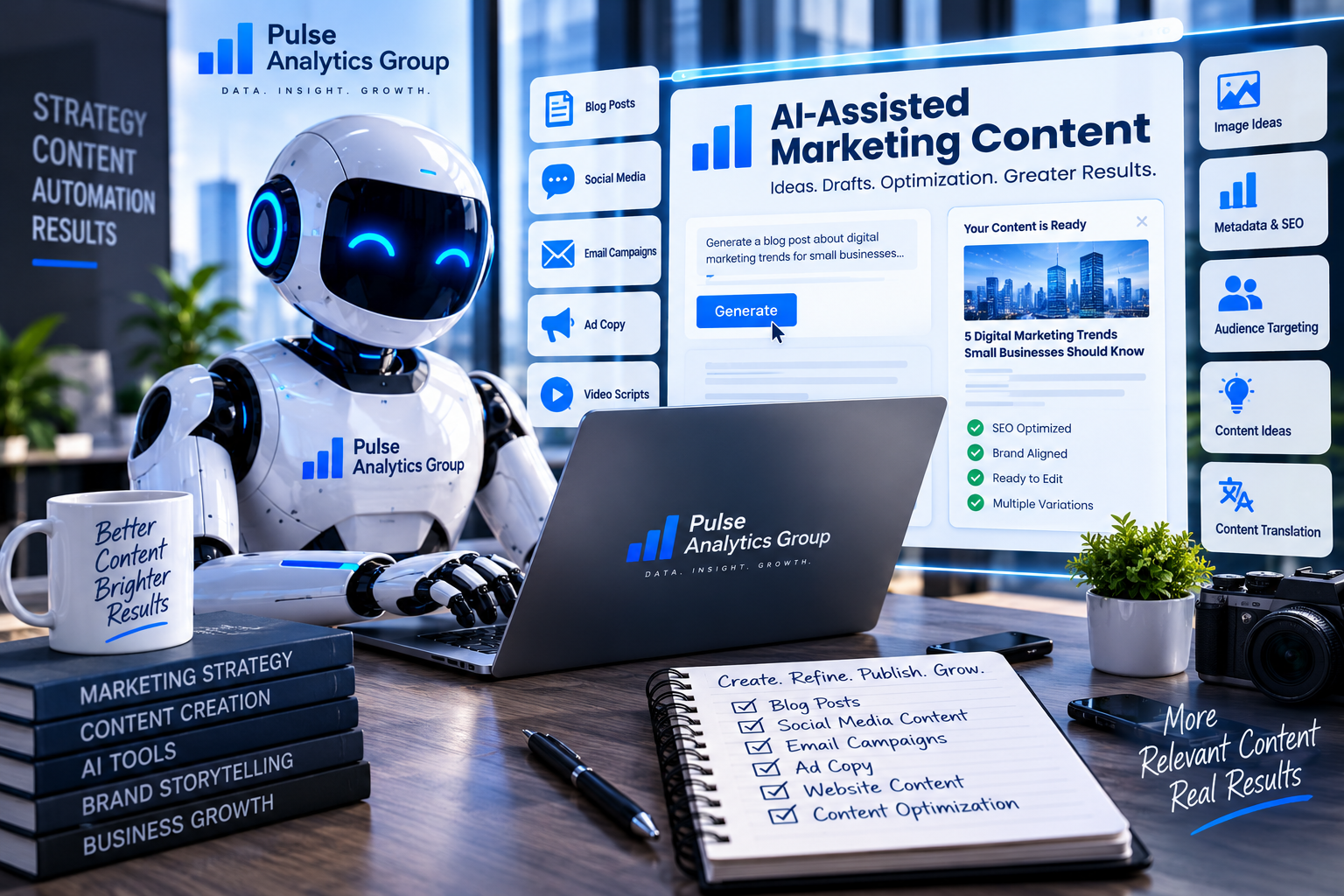
AI can accelerate research, ideation, drafting, repurposing, and content workflows. But speed alone does not create effective marketing.
Content still needs a clear audience, accurate information, appropriate brand voice, strategic positioning, originality, and human review. AI can help produce more efficiently; people remain responsible for what the business ultimately says.
Give Customers Faster Access to the Information They Need
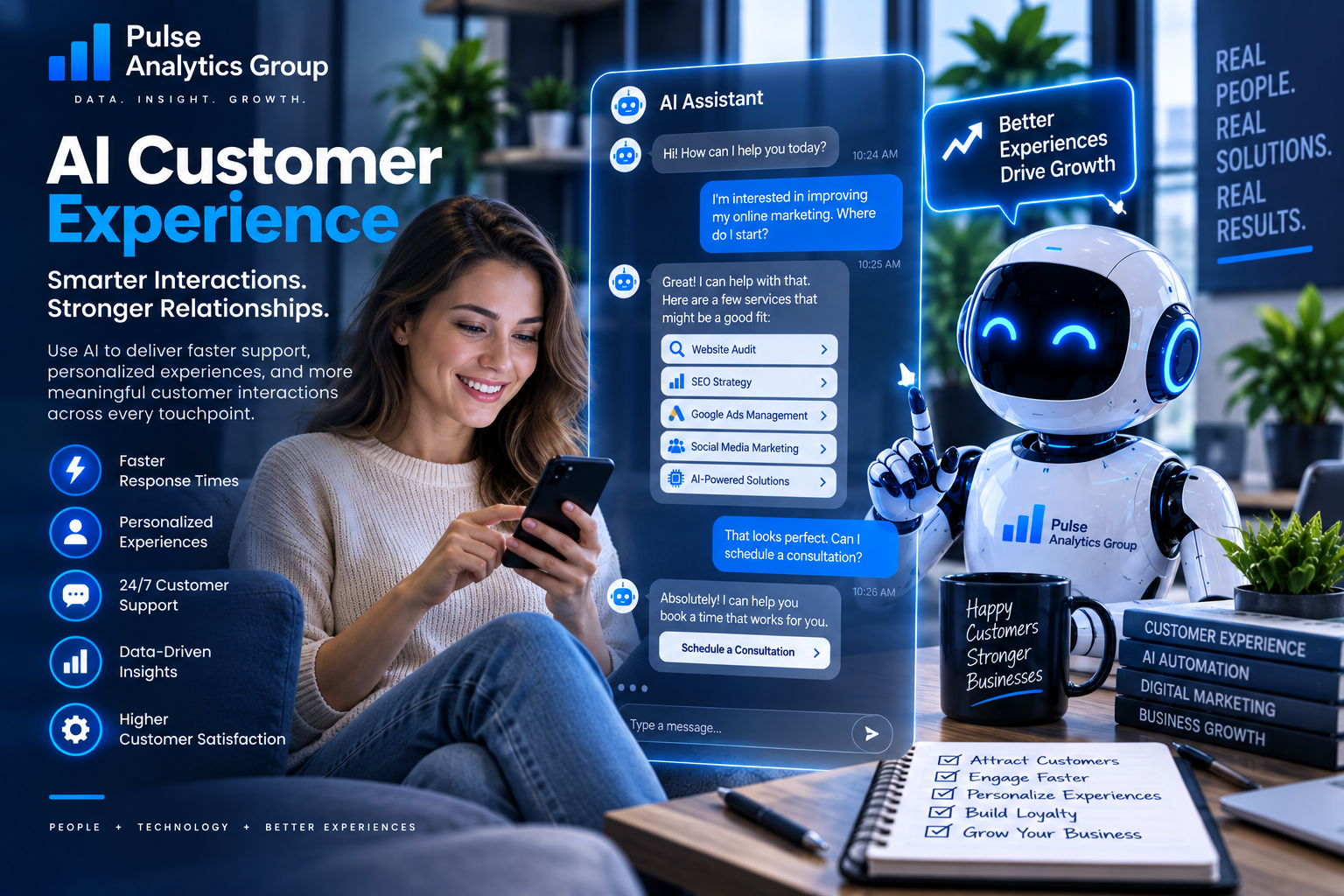
Customers increasingly expect businesses to be accessible, responsive, and easy to interact with. AI-powered experiences can help answer common questions, guide visitors toward useful information, assist with lead qualification, and support communication workflows.
The objective is not to replace human relationships. It is to reduce unnecessary friction and allow people to focus on interactions where human judgment, empathy, and expertise add the most value.
Automate Repetitive Work So Your Team Can Focus on Higher-Value Work
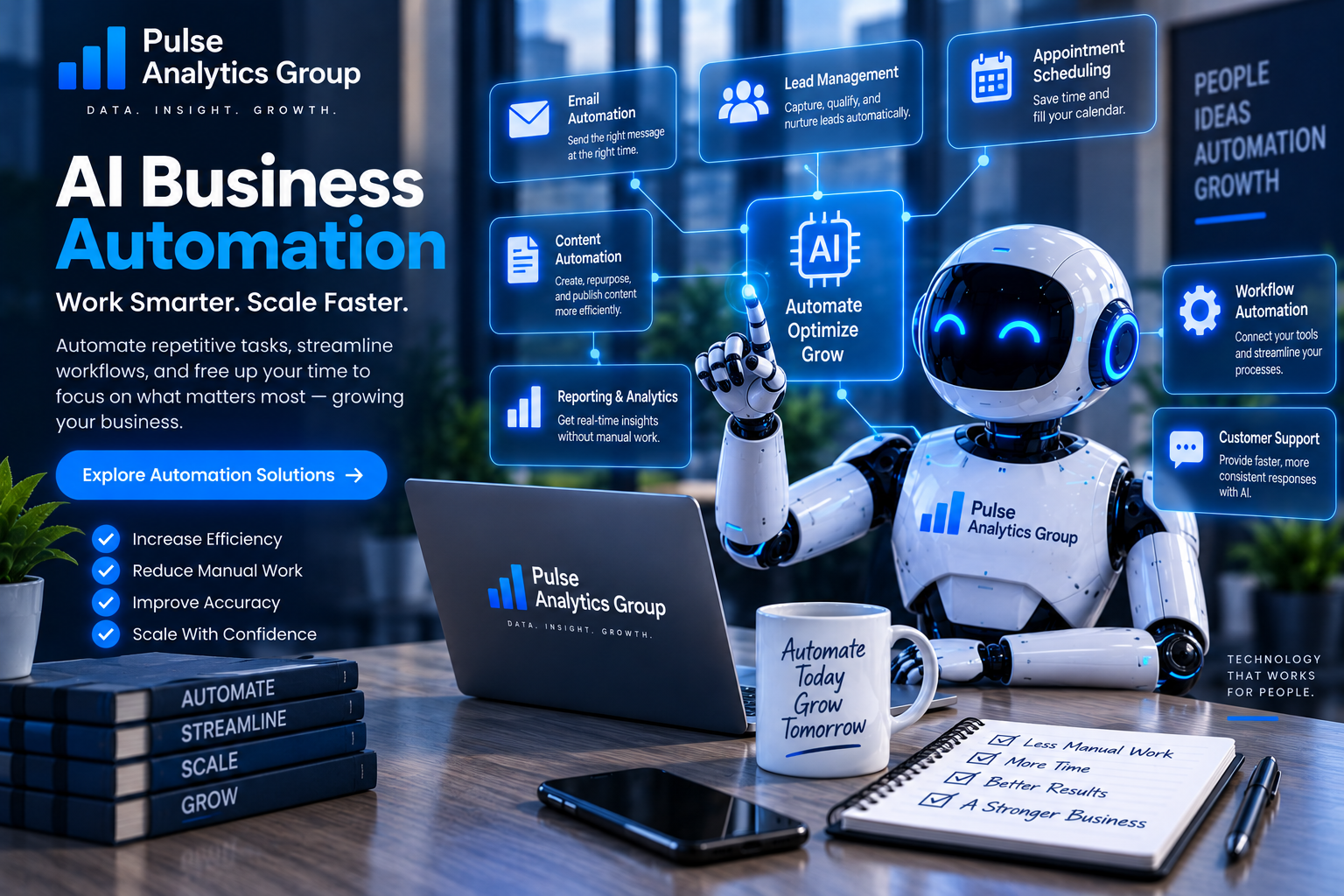
Many businesses spend significant time moving information between systems, organizing repetitive tasks, responding to routine inquiries, generating summaries, and performing manual administrative work.
AI and automation can streamline those processes when the workflow is well defined and appropriate controls are in place. The objective is not simply fewer human actions—it is a better use of human attention.
Use AI to Find Patterns Inside Your Data
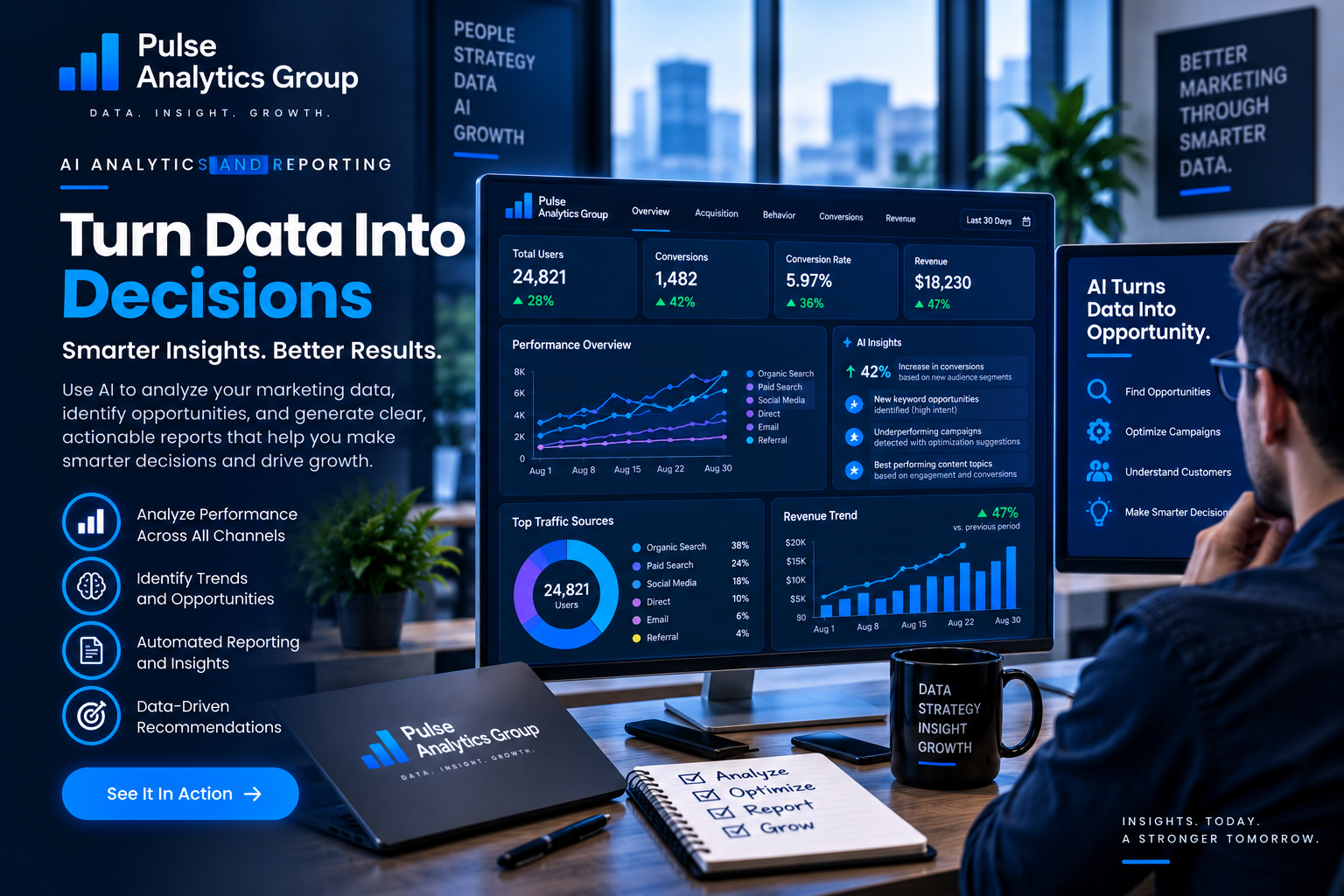
Modern businesses generate more information than people can reasonably evaluate manually. AI can assist with organizing information, identifying patterns, summarizing large datasets, and highlighting areas that deserve further analysis.
AI does not replace analytical judgment. It can become a powerful decision-support tool that helps teams spend less time searching through information and more time deciding what the information means.
Build More Intelligent Lead Workflows
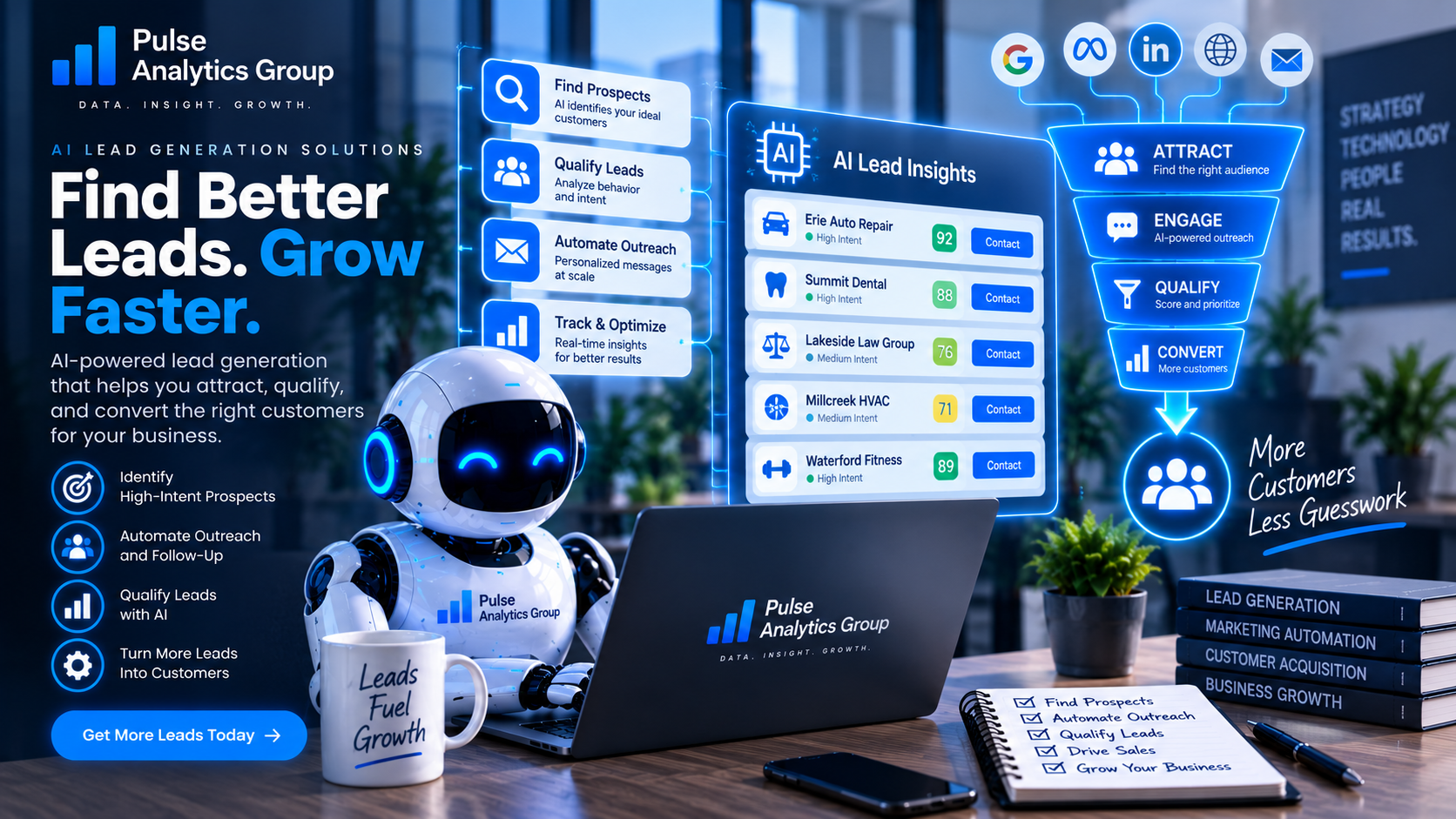
AI can assist businesses in handling inbound inquiries, qualifying prospects, organizing information, and directing leads toward the appropriate next step.
When integrated correctly, these systems can reduce response friction while helping sales teams spend more time on qualified opportunities and meaningful conversations.
Make Digital Experiences More Relevant
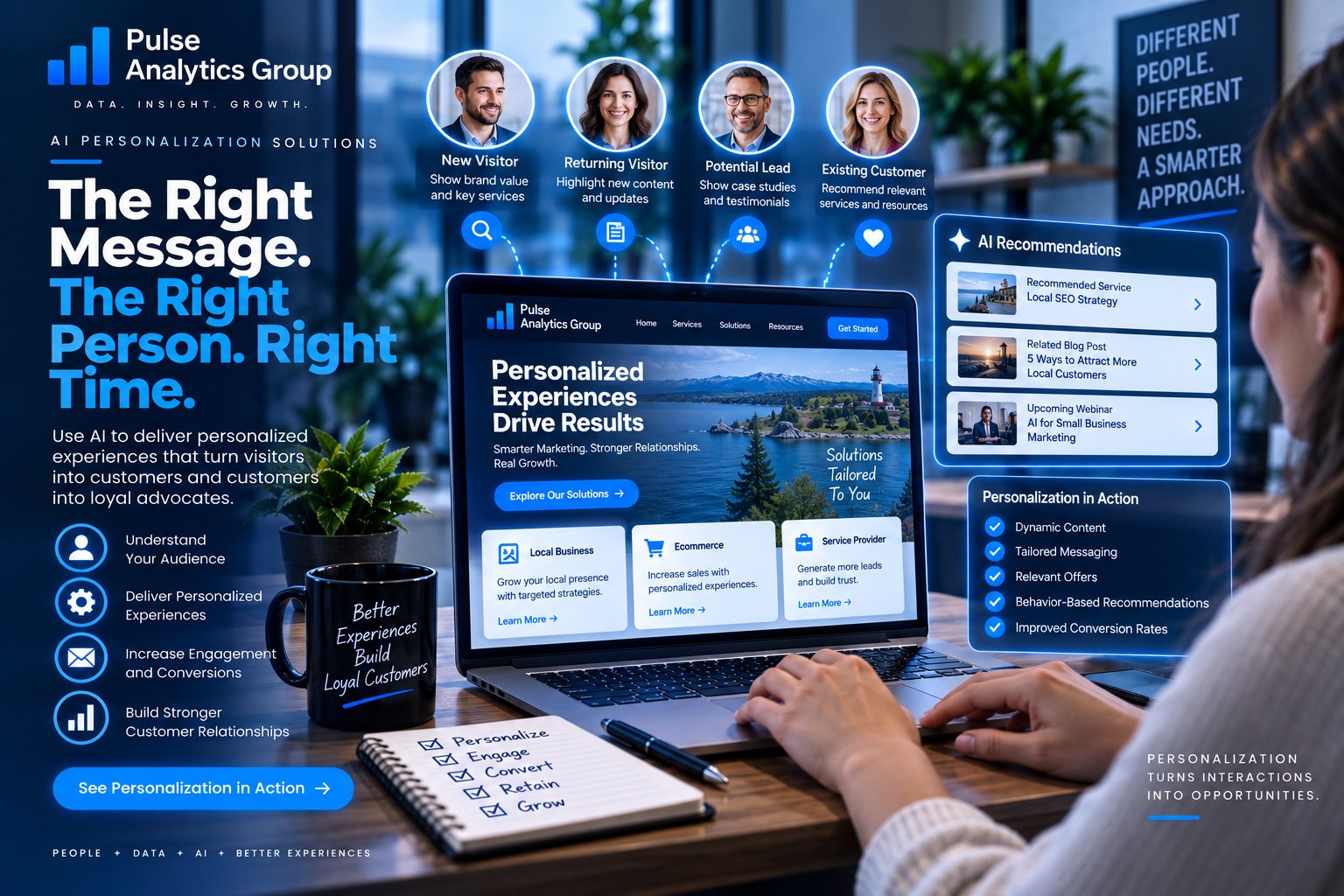
AI can help businesses deliver more relevant experiences by using available information to understand customer interests, behaviors, and interactions.
Personalization can support content, recommendations, communications, customer experiences, and other areas where relevance can improve engagement. The quality of the experience, however, still depends on the quality of the data and the strategy behind it.
Integrate AI Into the Digital Experience
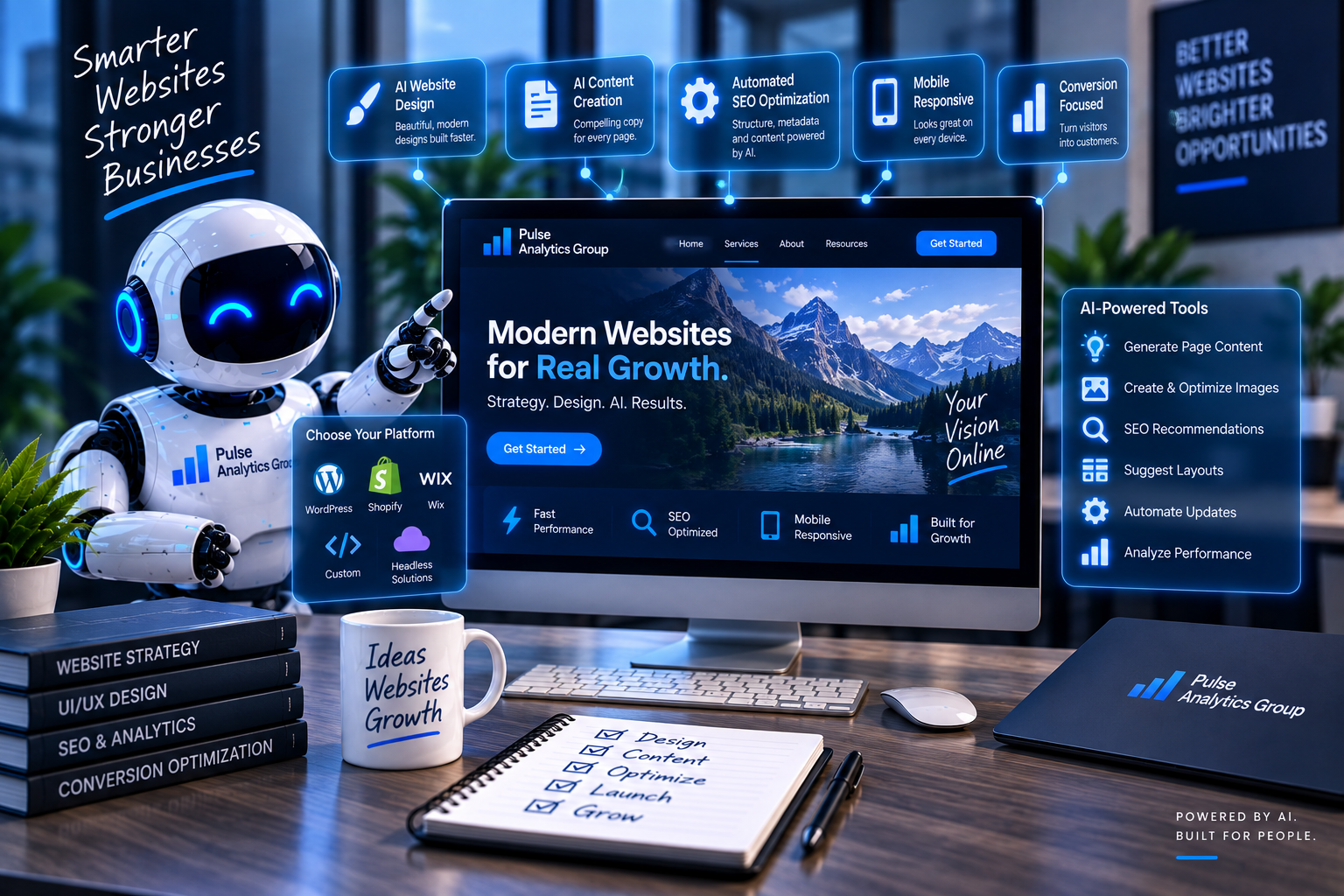
AI does not have to exist as a separate application. It can become part of the website and digital experience itself.
Depending on the business requirements, AI can support customer assistance, information retrieval, lead qualification, recommendations, interactive experiences, and other website functionality.
Automation Does Not Eliminate Judgment
AI systems can produce useful results, but they can also produce incorrect, incomplete, outdated, or inappropriate information. Responsible implementation requires understanding those limitations.
Our approach keeps human oversight where accuracy, judgment, brand integrity, customer relationships, privacy, or business consequences require it.
The goal is not to automate everything. The goal is to determine what should be automated, what should remain human-led, and how the two can work together effectively.
From Business Problem to Working AI Solution
We approach AI implementation as a business and workflow exercise, not simply a technology purchase. The process is designed to make sure the technology has a purpose before it becomes part of the business.
Phase 01 — Identify
Determine where the business is experiencing inefficiency, friction, missed opportunities, or information bottlenecks.
Phase 02 — Evaluate
Determine whether AI is actually appropriate for the problem and identify potential tools, integrations, and approaches.
Phase 03 — Design
Define the workflow, inputs, outputs, human oversight, system interactions, data requirements, and success criteria.
Phase 04 — Implement
Integrate the selected solution into the appropriate marketing, website, analytics, or business workflow.
Phase 05 — Test
Evaluate system behavior, accuracy, workflow performance, usability, security considerations, and failure conditions.
Phase 06 — Optimize
Monitor results and refine the system as business requirements, technology, and available data evolve.
AI Can Support the Work Your Business Already Does
AI is most useful when it fits into a real workflow. Depending on the business, applications may include:
AI Becomes More Useful When It Connects to Your Existing Systems
The greatest opportunities often occur when AI is connected to the systems a business already uses. Websites, analytics platforms, advertising systems, CRM platforms, content workflows, customer communications, and internal processes can potentially work together as part of a more intelligent digital ecosystem.
Don't Adopt AI Because Everyone Else Is
Adopt it because there is a real problem worth solving, a process worth improving, or an opportunity worth pursuing.
Pulse Analytics Group can help you identify practical AI opportunities and develop solutions that fit your business, your technology, your data, and your objectives.