
Build an E-Commerce Business Designed to Sell, Scale, and Perform
An online store is not simply a website with products on it. It is a complete digital commerce system connecting product strategy, technology, customer experience, marketing, payments, fulfillment, analytics, and ongoing optimization.
Pulse Analytics Group helps businesses build, redesign, optimize, market, and measure e-commerce operations across leading commerce platforms—with specialized Shopify expertise and a broader platform-agnostic approach.
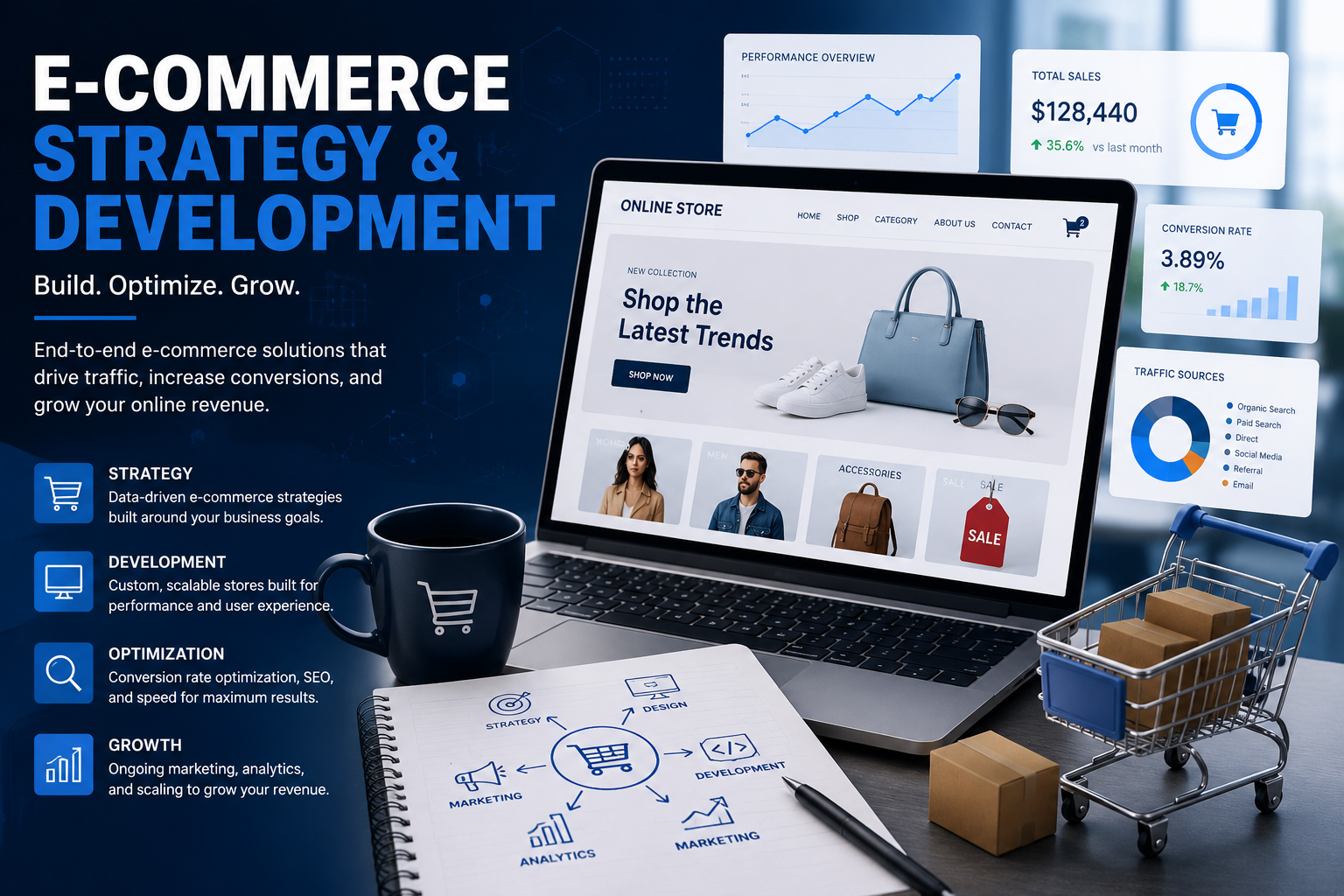
E-Commerce Is Now a Major Part of the Retail Economy
E-commerce is no longer a secondary sales channel for many businesses. The U.S. Census Bureau estimated $326.7 billion in retail e-commerce sales during the first quarter of 2026, representing 16.9% of total U.S. retail sales for the quarter. E-commerce sales were also up 9.8% from the first quarter of 2025.
That growth creates opportunity—but it also raises the standard. An online store has to compete for attention, communicate value, establish trust, make purchasing easy, and produce measurable business results.
Source: U.S. Census Bureau — Quarterly Retail E-Commerce Sales
Shopify Expertise Within a Broader Commerce Strategy
Shopify is a powerful commerce platform, but the platform itself is only one component of a successful e-commerce operation. Store architecture, product presentation, customer experience, marketing, analytics, fulfillment, and ongoing optimization all influence performance.
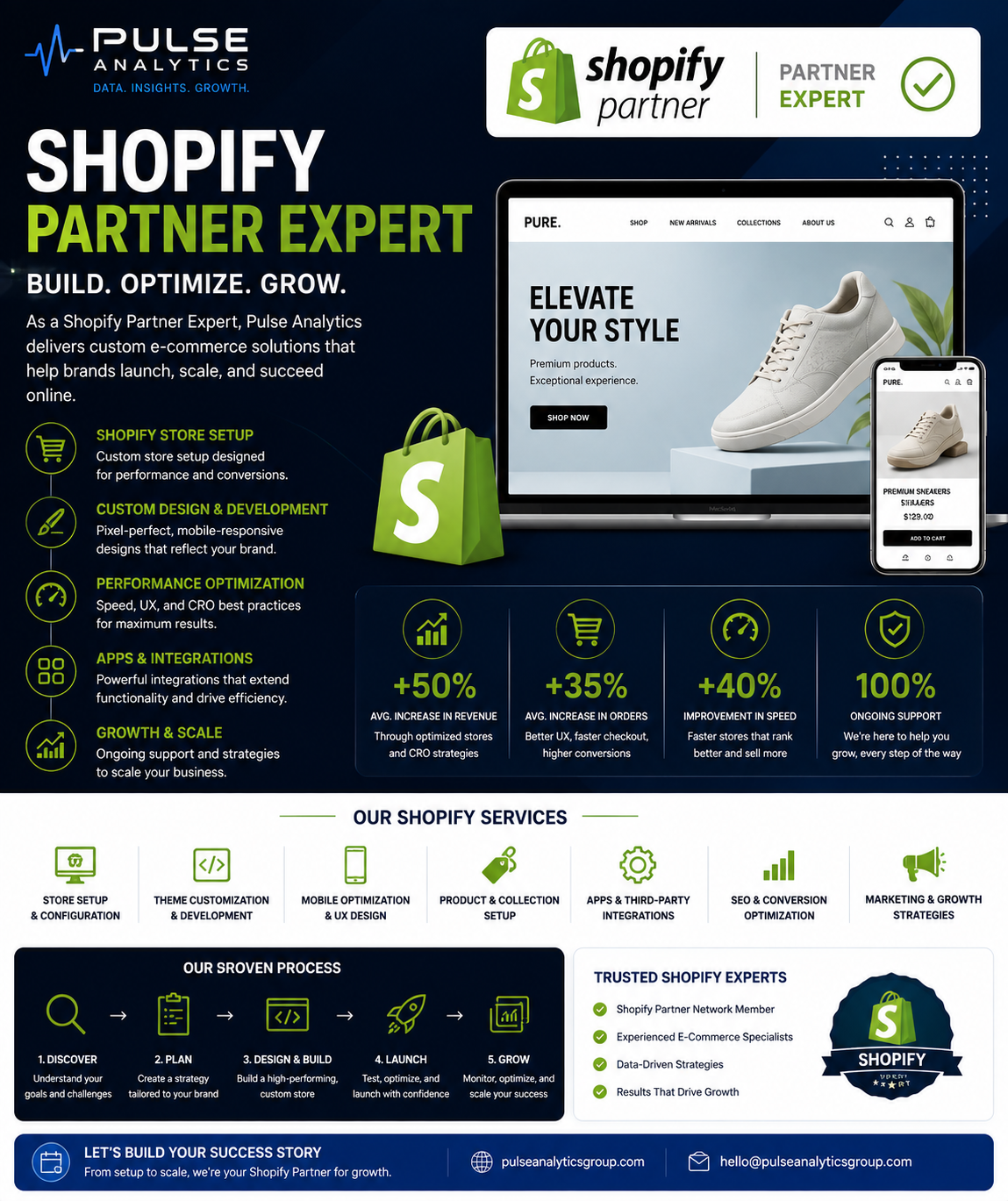
As a Shopify Partner, Pulse Analytics can help businesses use the platform as part of a larger commerce system rather than treating Shopify as the entire strategy.
Platform reference: Shopify — Products & Features
The Right Platform Depends on the Business
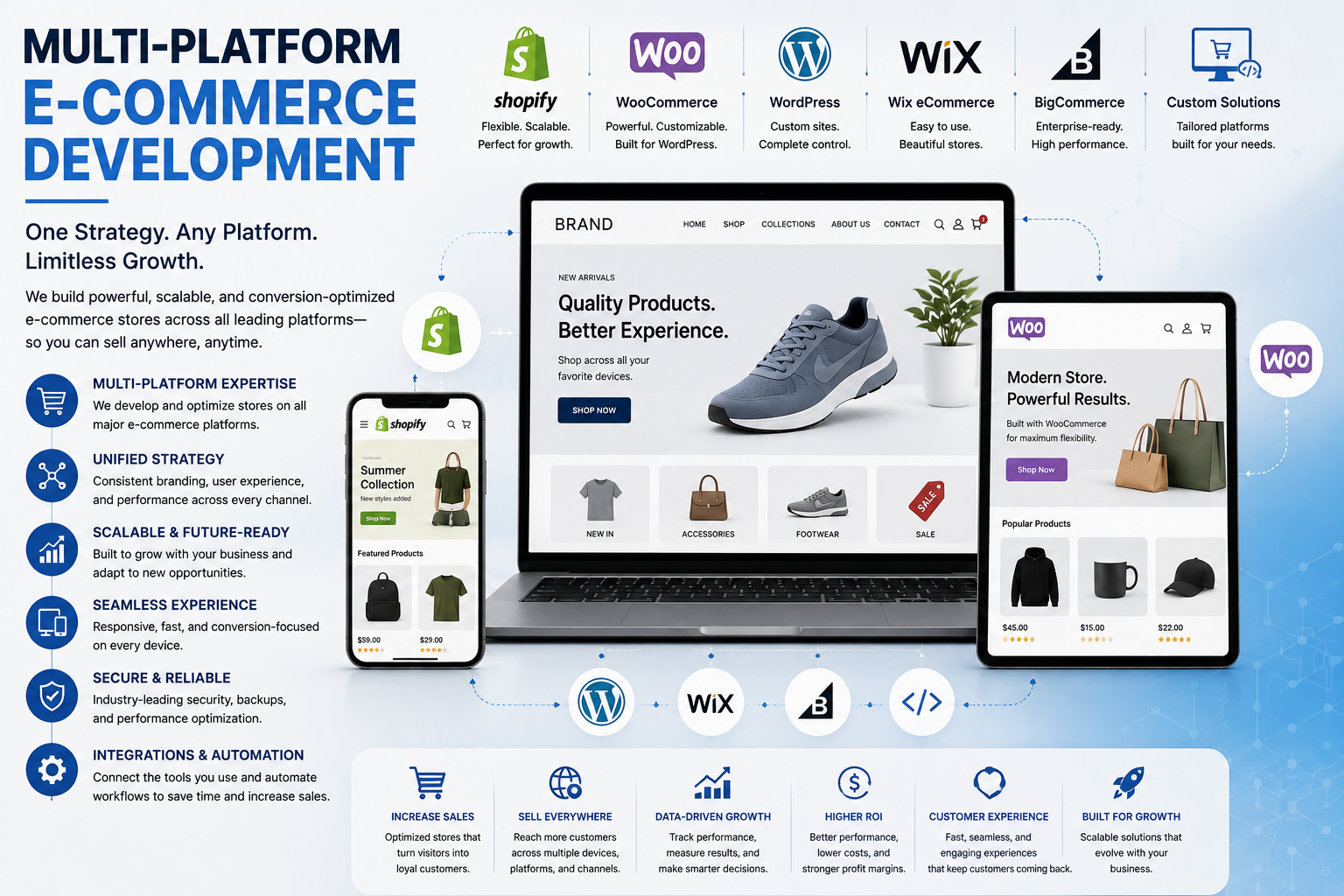
We do not believe every business should be forced onto the same commerce platform. The right technology depends on product complexity, catalog size, business model, budget, integrations, operational requirements, scalability, and long-term objectives.
Build a Shopify Store Around the Business—not the Other Way Around
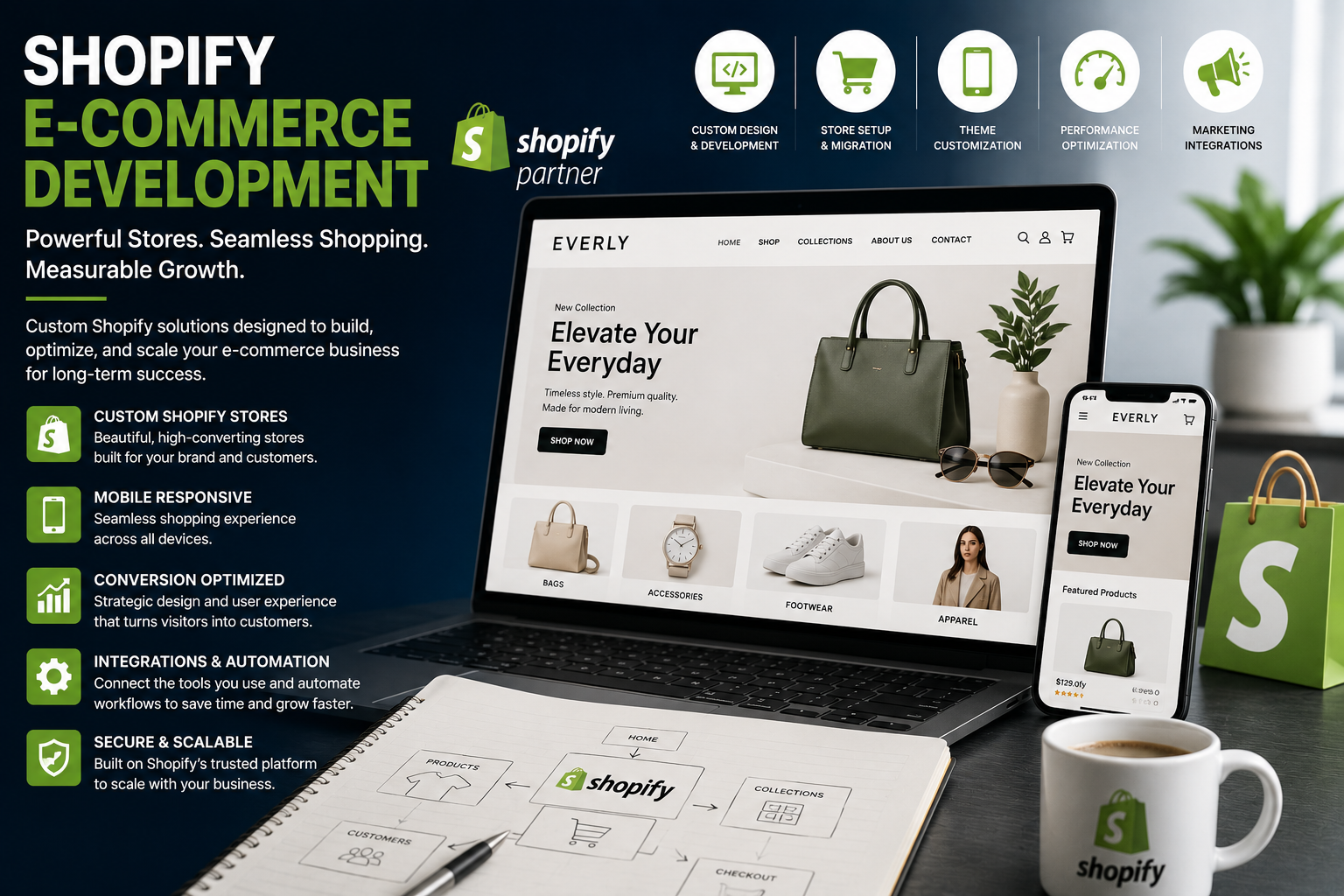
Shopify provides a powerful commerce foundation, but the implementation still matters.
We can help businesses plan store architecture, configure products and collections, customize themes, develop pages, establish navigation, improve conversion paths, connect marketing systems, and prepare the store for ongoing growth.
Flexible Commerce for Businesses That Need WordPress
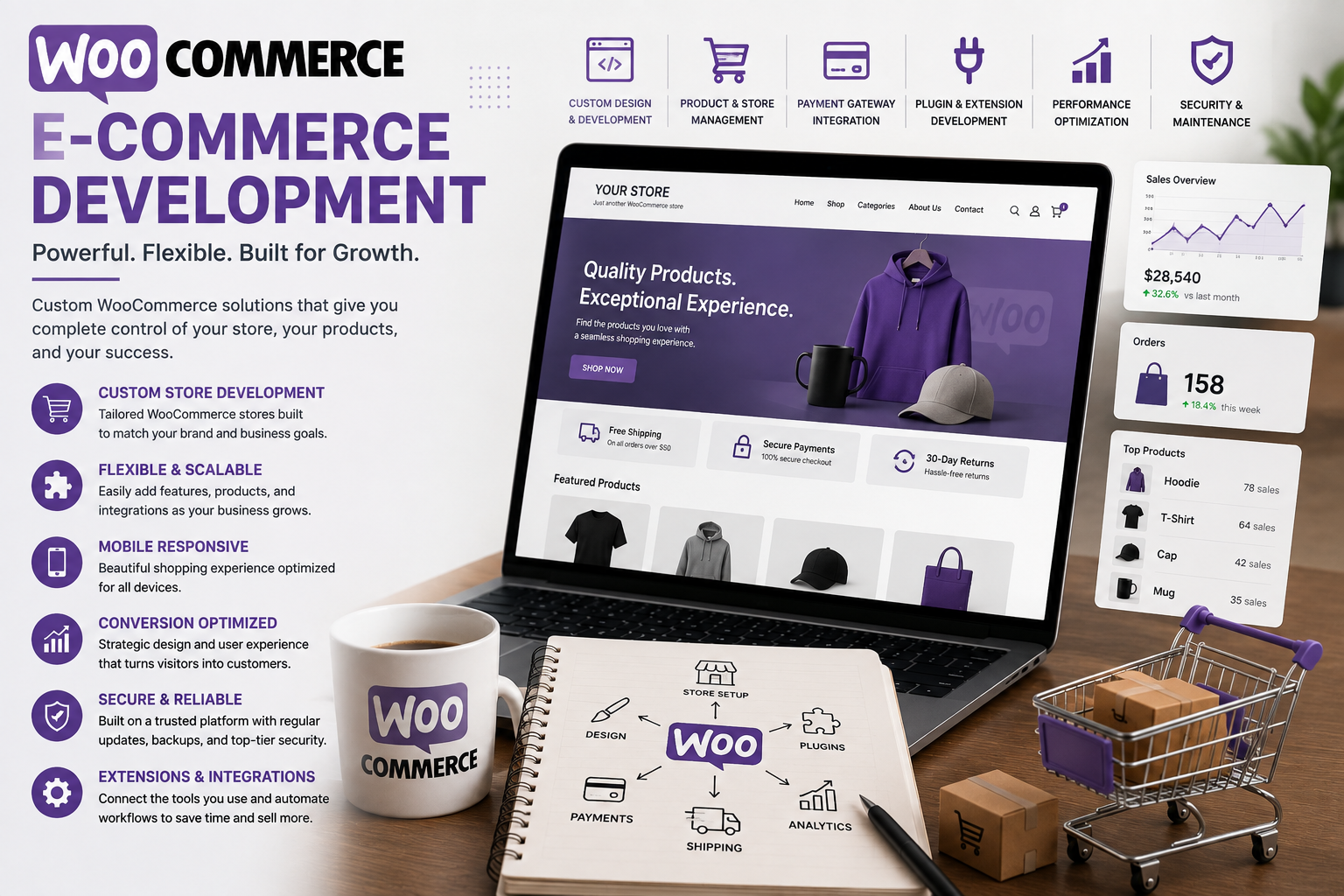
WooCommerce extends WordPress into a flexible e-commerce platform and can be a strong option for businesses that need extensive content management, customization, or integration with an existing WordPress ecosystem.
We can help businesses structure, develop, optimize, and market WordPress-based commerce experiences while keeping the relationship between content, products, SEO, and conversion in focus.
Commerce Platforms Should Serve the Business Model
Shopify and WooCommerce are not the only options. Depending on the requirements of the business, we can evaluate other commerce platforms and architectures.
This may include BigCommerce, Wix, Squarespace, custom commerce environments, or more advanced architectures such as headless commerce.
The objective is to select technology based on requirements rather than selecting a platform simply because it is popular.
Choosing an E-Commerce Platform Is a Business Decision
Before recommending a platform, we consider the business model, products, customer experience, operational requirements, marketing strategy, budget, integrations, technical requirements, and anticipated growth.
A platform that works exceptionally well for one merchant may be the wrong choice for another.
Our role is to help determine what the business actually needs and then build the technology around those requirements.
The Storefront Is the Visible Layer of a Much Larger System
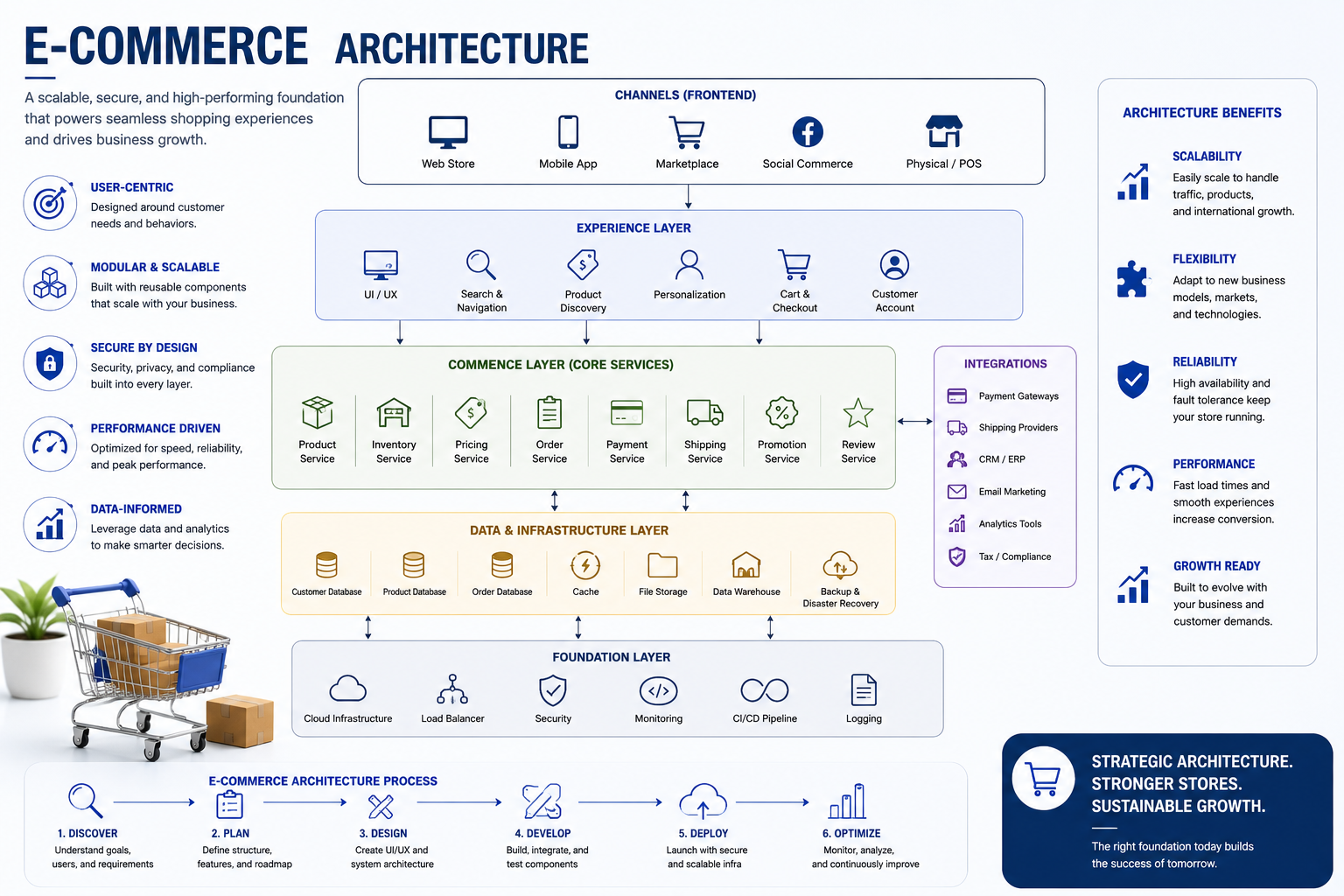
Customers see the storefront. Behind it, the business may be coordinating products, inventory, payments, fulfillment, customer accounts, analytics, advertising, email, marketplaces, shipping, and customer support.
The Storefront Is Only One Part of the Commerce System
E-commerce architecture can include the storefront, product catalog, checkout, payments, inventory, fulfillment, customer accounts, analytics, marketing platforms, email, advertising, shipping, and third-party integrations.
We look at the relationship between those systems rather than treating the storefront as an isolated website.
Product Pages Have One Job: Help Customers Make a Decision
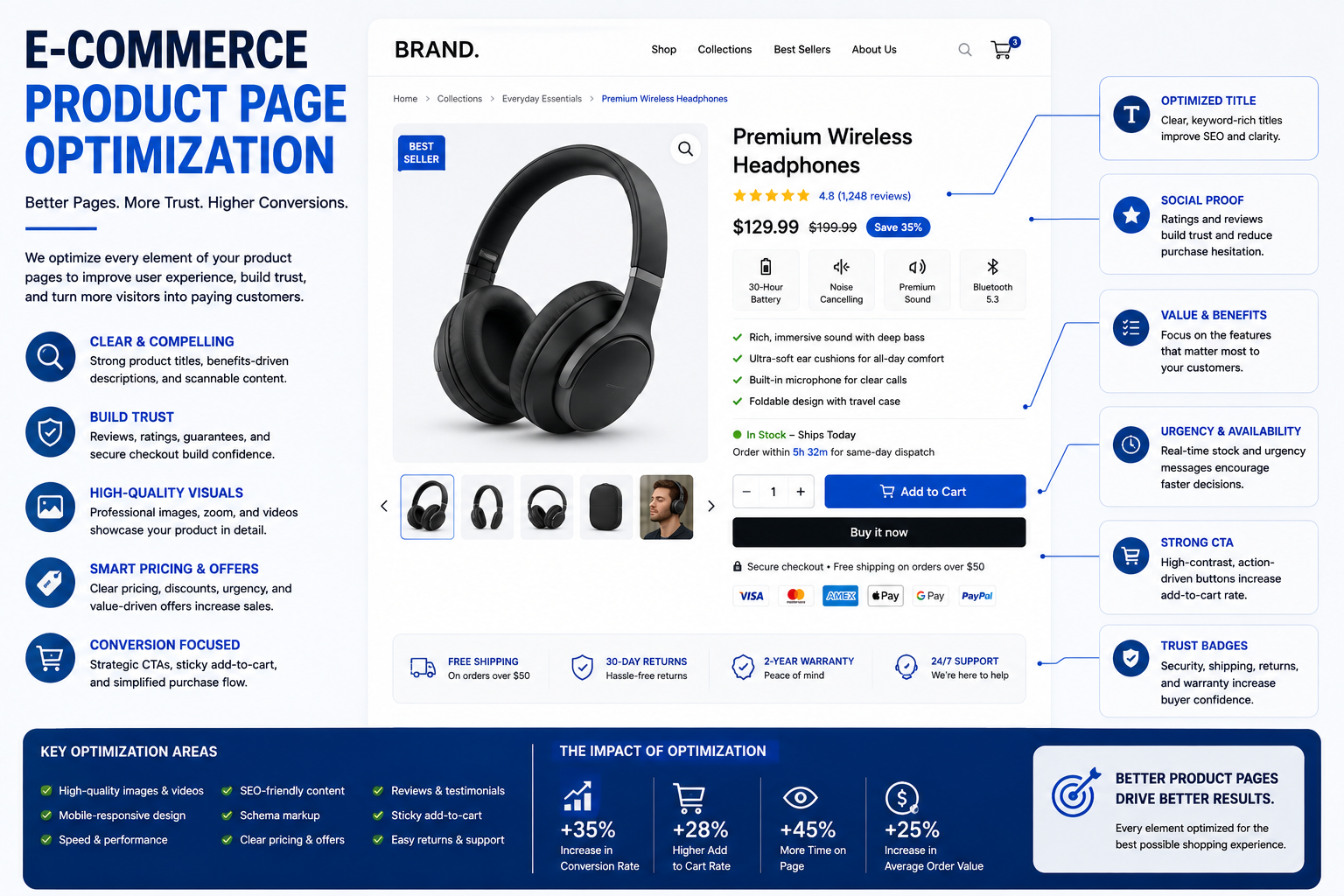
Product pages need to answer the questions a potential customer has before purchasing.
Product information, photography, descriptions, pricing, variants, availability, shipping information, reviews, trust signals, and calls to action all contribute to the purchase experience.
Every Stage of the Customer Journey Matters
E-commerce performance is not determined by the product page alone. Customers have to discover the store, understand the offer, trust the business, evaluate the product, complete checkout, and have a reason to return. Each stage creates an opportunity—or a point of friction.
A Customer Who Reaches Checkout Has Already Done the Hard Part
Getting a shopper to the cart is not the finish line. Checkout introduces its own usability challenges, and unnecessary friction can turn purchase intent into abandonment.
Baymard Institute's ongoing research places average documented cart abandonment at about 70%. Its research also finds that checkout design and flow frequently contribute directly to abandonment. That makes checkout a strategic part of conversion optimization—not simply a payment form.
Revenue Is Only One Part of the Equation
A growing store needs more than sales volume. Decisions around average order value, acquisition cost, conversion rate, repeat purchasing, product mix, margin, and customer lifetime value can materially change whether growth is sustainable.
Then the business asks the next questions: What did it cost to acquire those customers? Which products and channels perform best? How many customers return? Where is margin being created or lost? Those questions are where e-commerce analytics becomes business intelligence.
The First Purchase Should Not Be the End of the Relationship
Acquisition brings customers into the business. Retention determines what happens afterward. Product quality, fulfillment, customer experience, communication, support, email marketing, offers, and the overall brand experience can influence whether a customer returns.
Your Products Need to Be Discoverable Before They Can Be Purchased
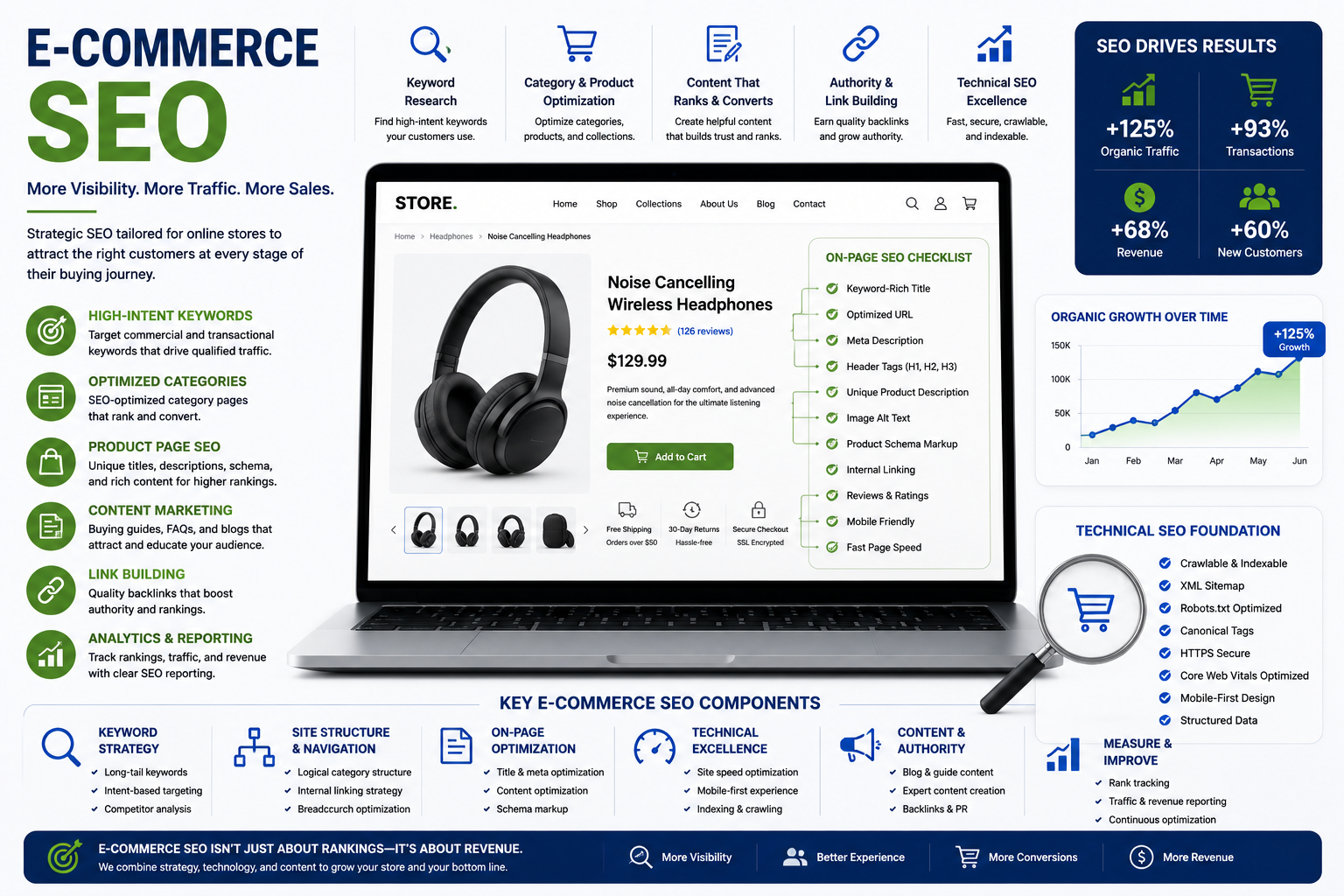
Search visibility can create a valuable source of qualified product discovery.
We can develop e-commerce SEO strategies around product pages, category pages, search intent, structured content, technical SEO, internal linking, site architecture, and other relevant search considerations.
Connect Paid Acquisition to the Products That Matter
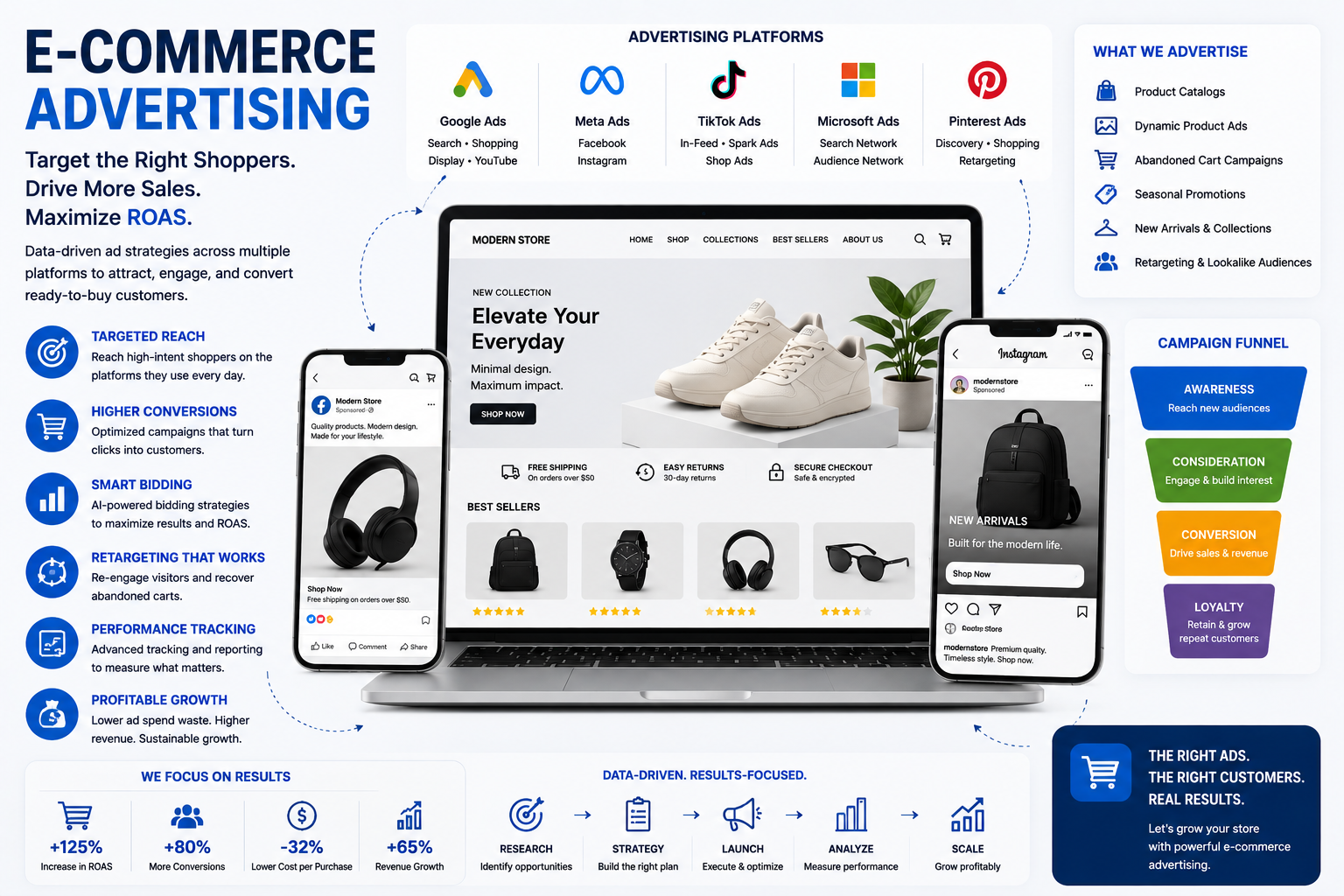
E-commerce advertising requires more than generating clicks. The campaign needs to connect audience, product, offer, landing experience, and conversion measurement.
We can develop paid acquisition strategies around Google Ads, social advertising, retargeting, product promotion, and other appropriate channels.
Traffic Does Not Pay the Bills. Conversions Do.
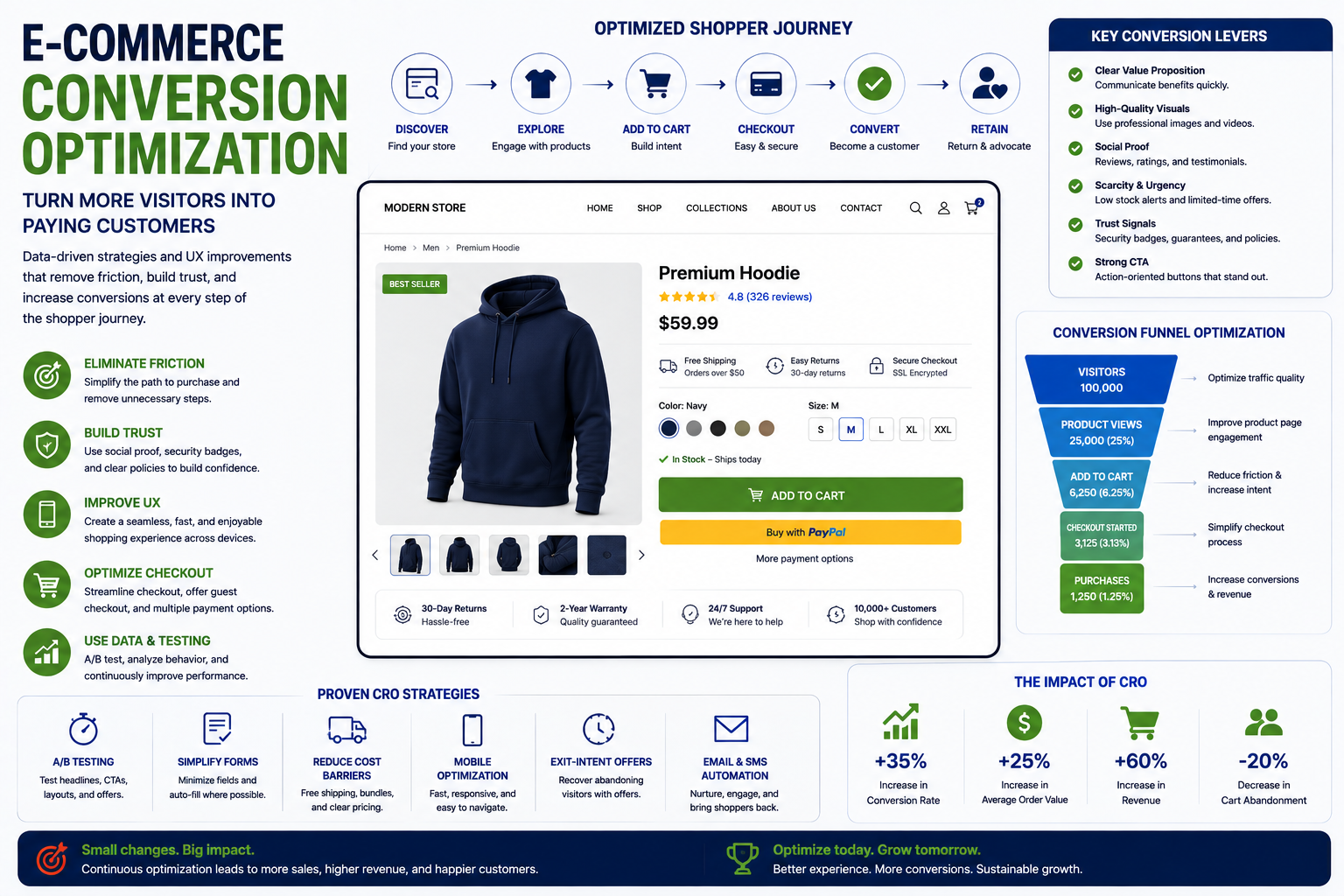
An online store can have substantial traffic and still underperform if visitors do not have enough confidence or clarity to purchase.
We evaluate the customer journey from landing page through checkout to identify opportunities to reduce friction and improve the purchase experience.
Understand What Customers Do Before, During, and After the Purchase
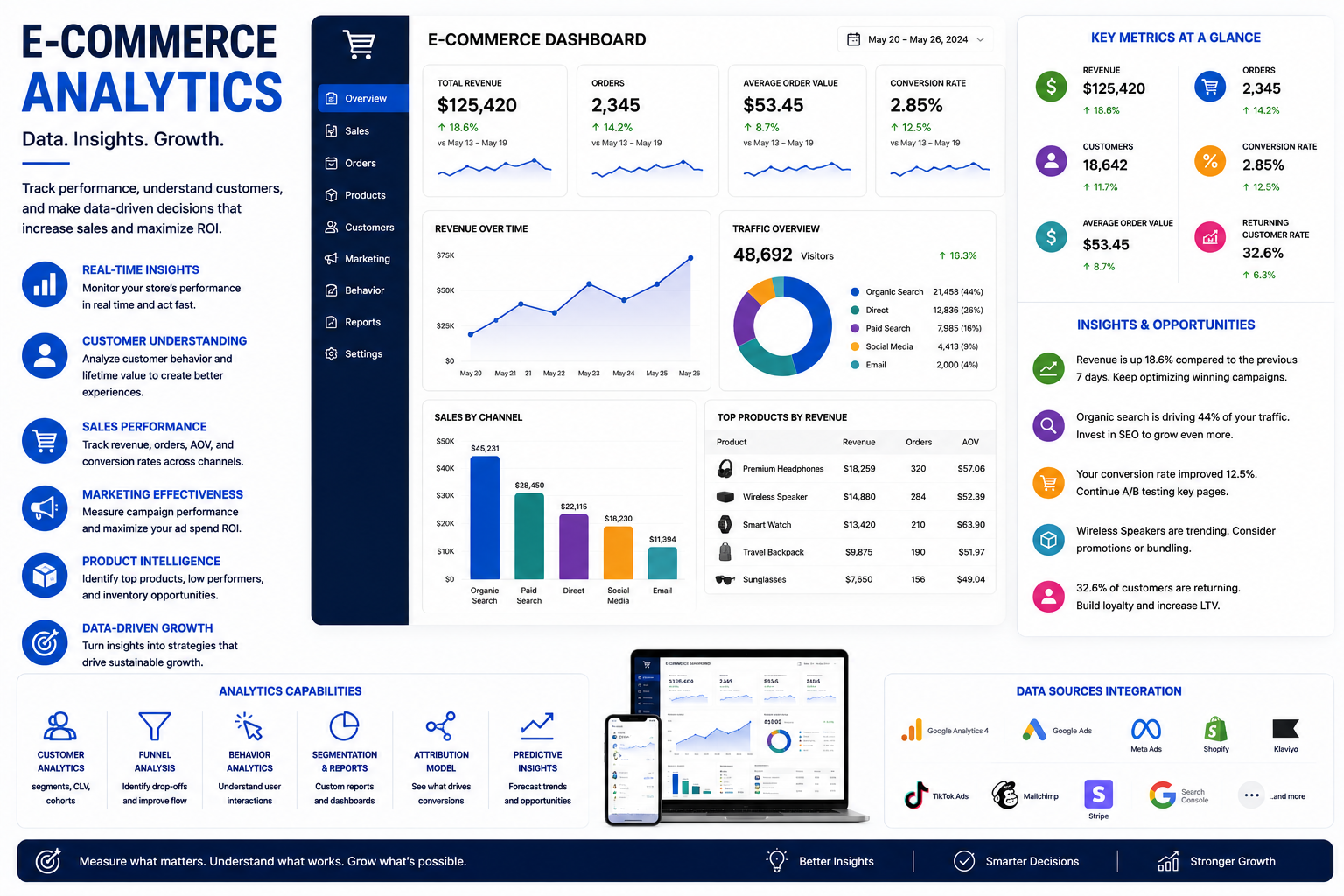
E-commerce creates a tremendous amount of behavioral information. The challenge is turning that information into useful decisions.
We establish measurement around traffic, product engagement, conversions, revenue, acquisition channels, customer behavior, and other relevant performance indicators.
Your Store Can Sell Beyond Your Website
Modern e-commerce can extend across search, social platforms, marketplaces, email, advertising platforms, physical locations, and other customer touchpoints.
We help businesses think about their commerce presence as an interconnected ecosystem rather than a single website.
Moving Platforms Does Not Have to Mean Starting Over
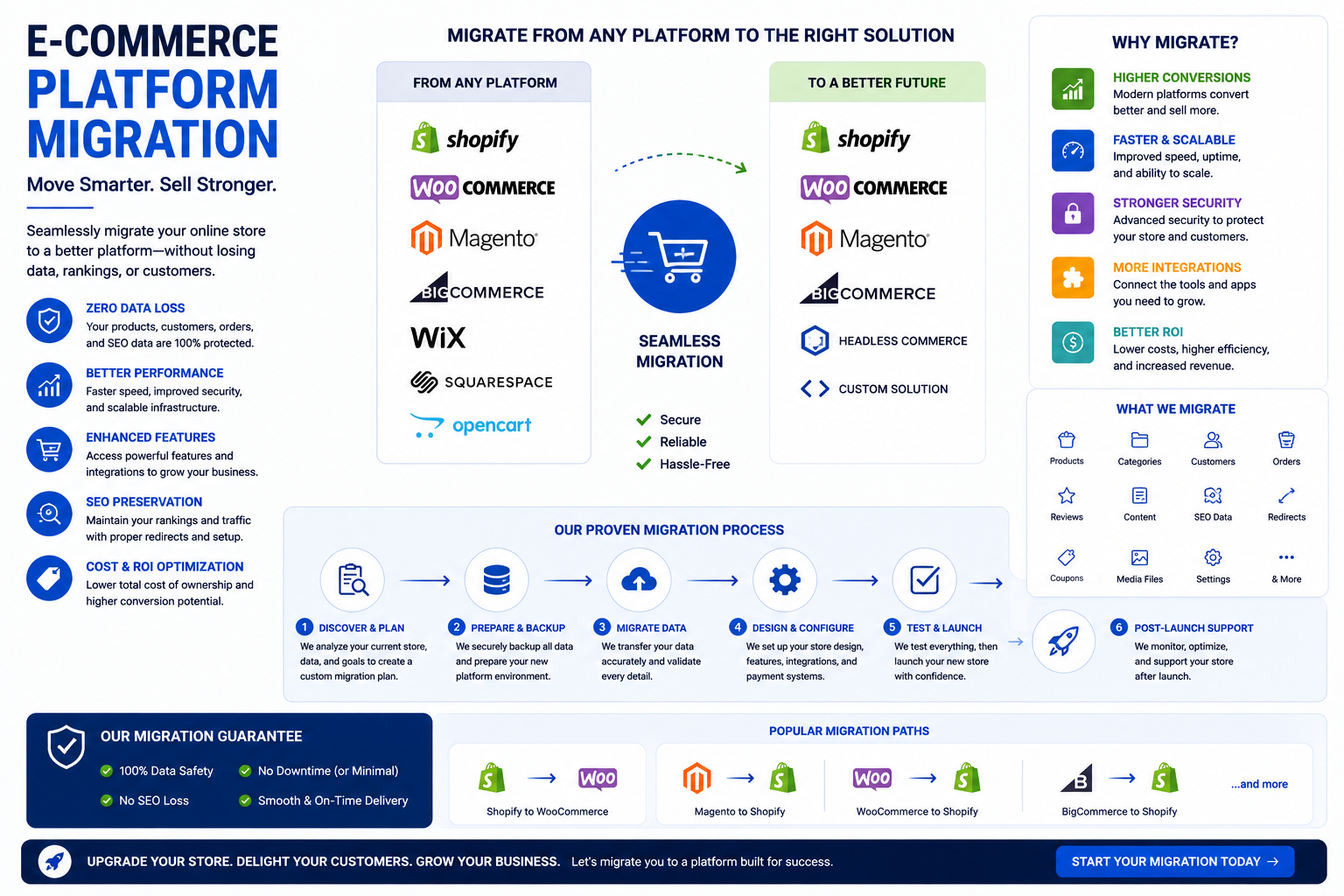
Businesses sometimes outgrow their existing platform or discover that another platform better supports their future plans.
A migration needs to account for products, collections, customers, URLs, content, SEO, analytics, integrations, payment systems, and the customer experience.
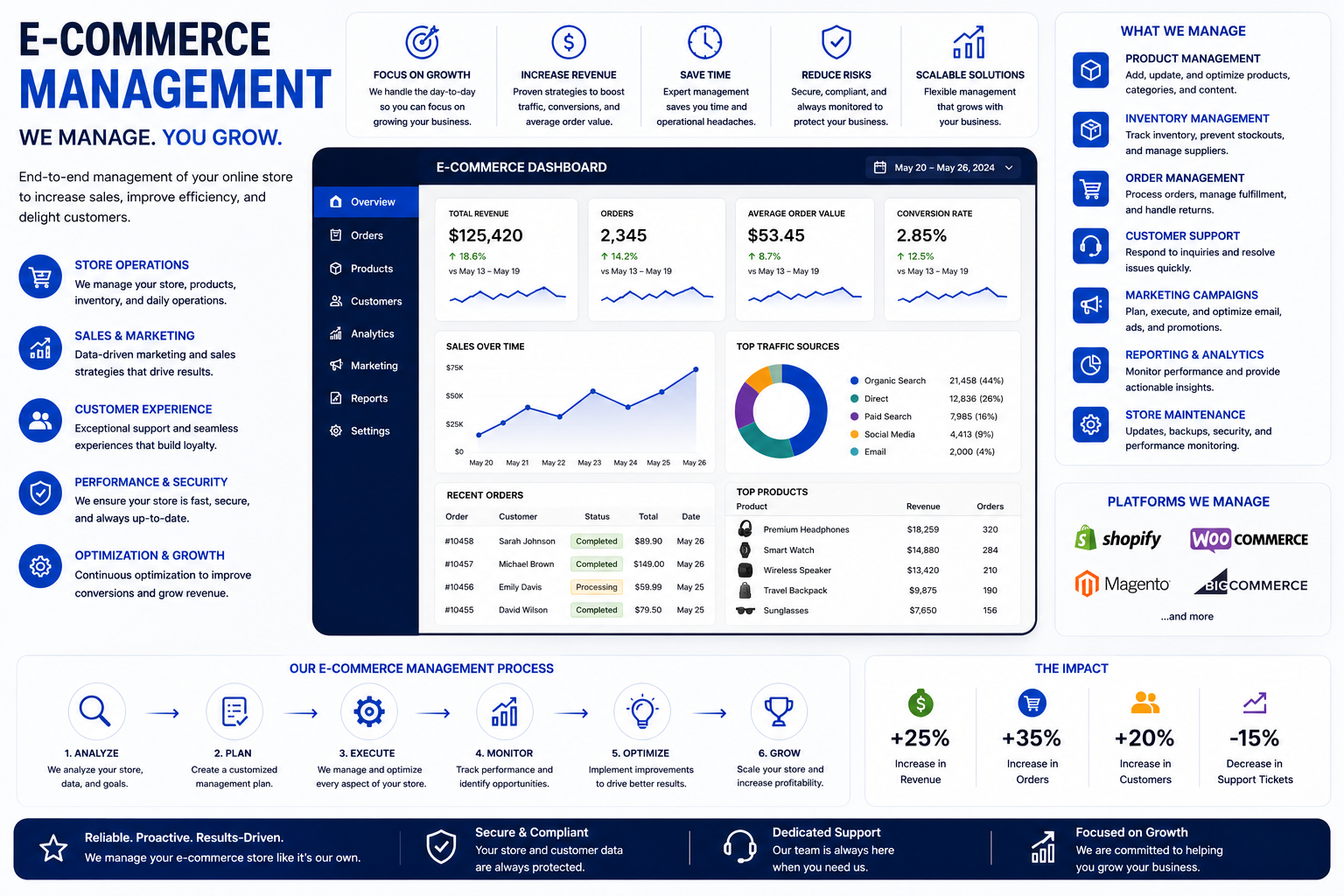
Launching the Store Is the Beginning
E-commerce businesses need continuous attention. Products change, customers change, competitors change, platforms change, and performance changes.
Ongoing support can include store improvements, technical maintenance, SEO, conversion optimization, marketing, analytics, content, product updates, and strategic recommendations.
From Commerce Strategy to Measurable Growth
Every engagement is different, but our process generally follows a structured progression.
01 — Discover
Understand the business, products, customers, operations, market, competitors, and objectives.
02 — Evaluate
Assess the current platform, technology, store experience, marketing, SEO, analytics, and conversion performance.
03 — Strategize
Establish the appropriate platform, architecture, customer experience, marketing strategy, and measurement framework.
04 — Build
Develop or improve the storefront, products, collections, content, integrations, conversion paths, and supporting systems.
05 — Launch
Test the customer experience, technical systems, analytics, payments, navigation, forms, and purchase process before launch.
06 — Grow
Apply SEO, advertising, social media, content, conversion optimization, analytics, and other acquisition strategies.
07 — Optimize
Use customer behavior and performance data to continually improve the store and marketing system.
E-Commerce Requires More Than Web Design
A beautiful storefront does not automatically create a profitable commerce operation.
E-commerce requires the integration of technology, customer experience, search visibility, acquisition, analytics, conversion optimization, branding, and business strategy.
Pulse Analytics brings those capabilities together so the store can be developed as a business asset rather than simply a website.
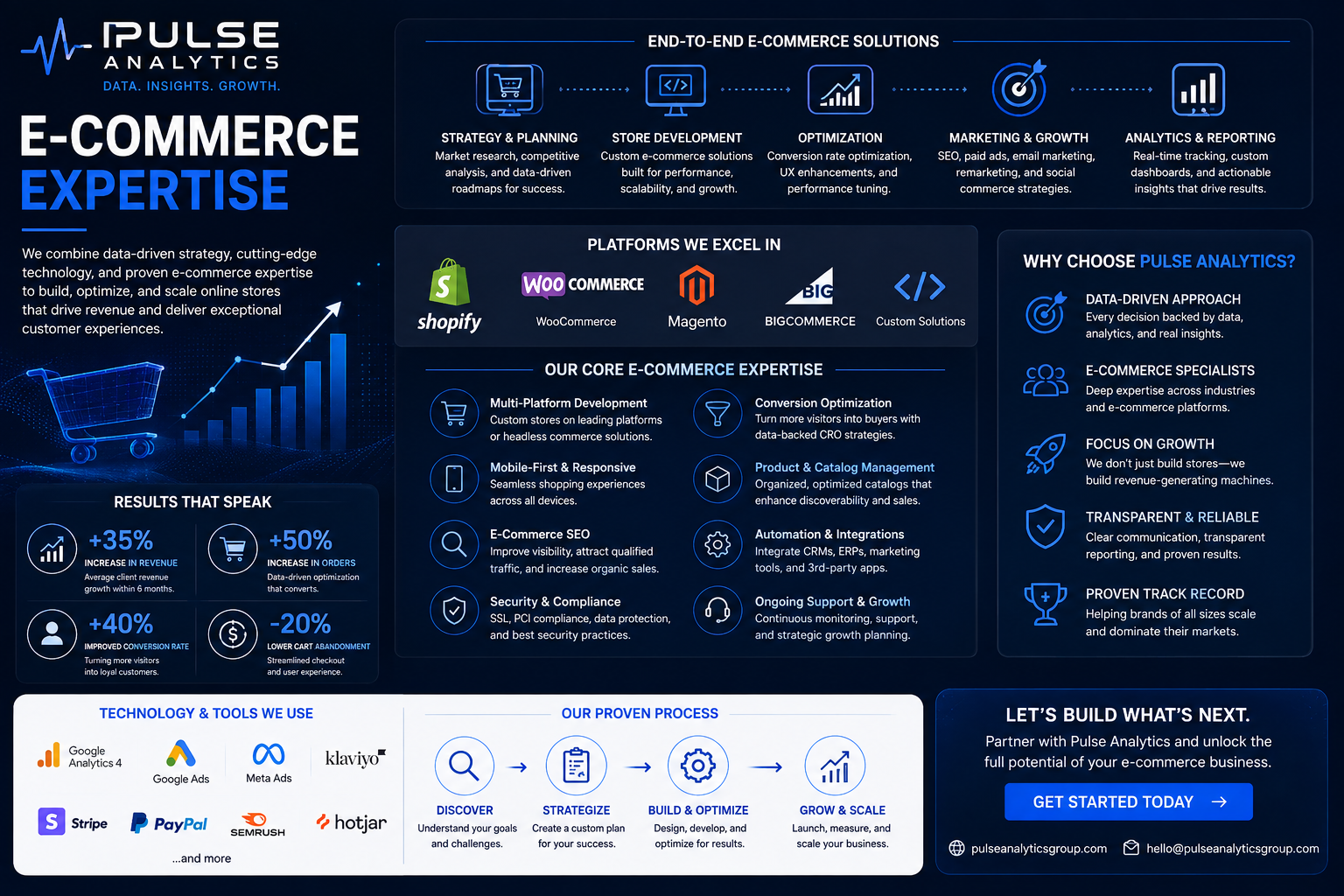
We Build the Store With the Business Behind It
E-commerce development works best when technical decisions are informed by the people who understand the products, customers, operations, fulfillment, margins, and business objectives.
We bring the digital strategy, development, marketing, analytics, and technology expertise. Your team brings the operational knowledge and product expertise.
Together, we develop a commerce experience designed around how the business actually operates.
E-Commerce Solutions Can Include
- E-commerce strategy
- Shopify development
- Shopify store setup
- Shopify theme customization
- WordPress e-commerce
- WooCommerce development
- BigCommerce
- Wix e-commerce
- Squarespace Commerce
- Custom commerce solutions
- Headless commerce strategy
- Store redesign
- Platform migration
- Product and collection architecture
- E-commerce SEO
- Google Ads
- Paid social
- Conversion rate optimization
- Analytics and reporting
- Ongoing e-commerce management
What We Are Building Toward
- A professional commerce presence
- A clear customer experience
- Discoverable products
- Stronger conversion paths
- Reliable measurement
- Better acquisition efficiency
- Scalable technology
- Actionable business intelligence
- Sustainable e-commerce growth
Your Store Is the Center of a Larger Marketing System
E-commerce development does not operate independently from marketing. Your store needs to connect with the channels customers use to discover, evaluate, and purchase products.
Your Online Store Should Be Built to Do More Than Look Good.
Whether you are launching your first online store, migrating from another platform, rebuilding an underperforming store, or preparing an established e-commerce operation for its next stage of growth, Pulse Analytics can help you evaluate the technology, strategy, marketing, and measurement behind the business.
As a Shopify Partner, with broader experience across e-commerce technologies and digital marketing disciplines, we can help connect the storefront to the larger system required to attract customers, convert them, and measure the results.